
Commercial Property Handover Checklist Singapore: The 2026 Tenant Guide

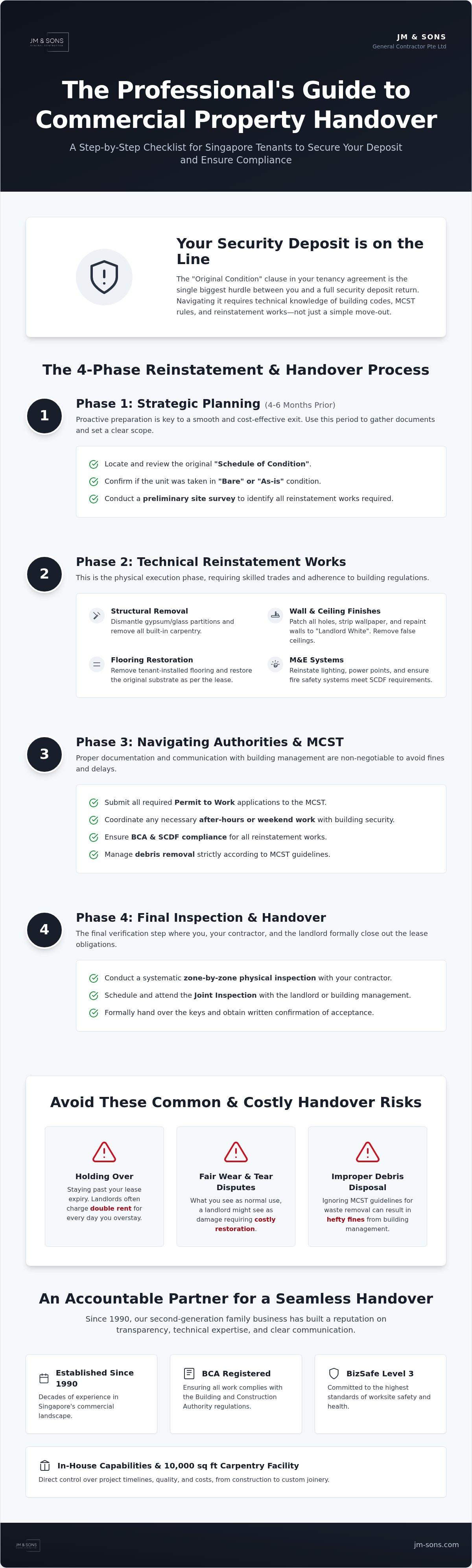
Your security deposit isn't just a financial buffer; it's a hostage held by the "original condition" clause of your tenancy agreement. For many SMEs and MNCs, the final weeks of a lease are a high-stakes race against the clock. You're likely feeling the pressure of tight timelines and the fear of unreasonable deductions from building management. It's a common frustration in the Singapore market, where "original condition" can feel like a moving target.
This guide provides a professional-grade commercial property handover checklist Singapore tenants can use to protect their interests. You'll learn how to navigate SCDF fire safety requirements and BCA regulations while managing the technical demands of hacking and debris removal. We'll cover everything from the Fire Code 2023 standards to the nuances of MCST coordination, ensuring you meet every regulatory hurdle before the keys change hands.
At JM & Sons, we've approached these handovers with sincerity and accountability since 1990. As a second-generation family contractor with BCA registration and BizSafe Level 3 certification, we know that a successful handover is a technical compliance audit, not just a simple move-out. Our experience with our own 10,000 sq ft carpentry facility and complex project coordination has taught us that transparency is the only way to ensure a full deposit return. Here's how to ensure your exit is as smooth as your entry.
Table of Contents
Understanding the Commercial Handover Landscape in Singapore (2026)
Commercial handovers in Singapore are fundamentally different from residential moves. While a home handover might focus on deep cleaning and light bulb replacements, a commercial exit is a technical construction project. Within a Leasehold estate, your obligations are strictly defined by the "Original Condition" clause. This isn't just fine print; it's the legal mechanism landlords use to ensure the space is ready for the next tenant. If you fail to meet this standard, you risk losing your security deposit or facing expensive rectification bills.
In 2026, sustainability standards have introduced a new layer of complexity. Landlords now look at how you manage waste during the handover process. It's no longer enough to just clear out the space. You must prove that debris is handled responsibly. A preliminary site survey conducted four to six months before your lease ends is the best way to identify these requirements early. This proactive approach helps you build a commercial property handover checklist Singapore that accounts for both your lease and modern environmental expectations.
The Baseline: Move-in Inventory vs. Lease Requirements
Before you plan your exit, you must locate your original Schedule of Condition. This document captures the exact state of the unit when you first took possession. It's the only way to differentiate between what you built and what was already there. You also need to confirm if you took the unit in "Bare Condition," meaning a hollow shell, or an "As-is" state with existing fit-outs. Using a comprehensive commercial property handover checklist Singapore ensures you don't miss these technical nuances.
The Joint Inspection serves as the final, binding verification where both parties agree the premises meet all contractual obligations.
Common Handover Risks for Singapore SMEs
Staying past your lease expiry, known as "Holding Over," is a costly mistake. Landlords often charge double rent for every day you remain in the unit after the contract ends. Another risk involves the interpretation of "Fair Wear and Tear." In a retail space, floor scuffs might be expected, but in a Grade A office, building management may demand a full floor restoration.
Improper debris disposal is a common trap. If your contractor ignores MCST guidelines, you'll face fines that erode your deposit return. Accountability starts with a clear plan and a contractor who respects the building's rules. This ensures that the physical work doesn't create new financial liabilities during your final weeks on-site.
The Technical Reinstatement Checklist: Meeting Lease Obligations
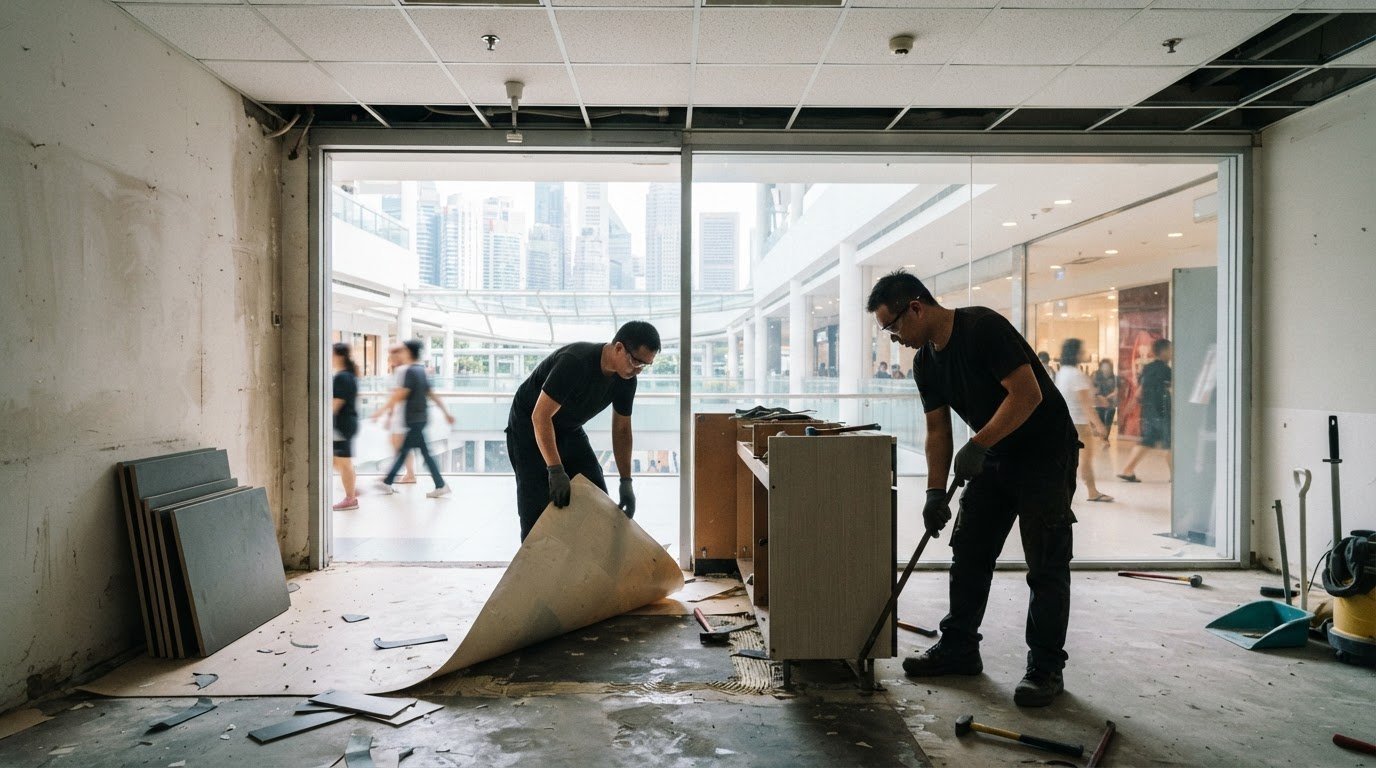
Reinstatement isn't just about clearing furniture; it's about reversing every modification made during your fit-out phase. A comprehensive commercial property handover checklist Singapore must prioritize structural and mechanical integrity over simple aesthetics. Landlords typically expect a "bare shell" finish, which means all tenant-added partitions, false ceilings, and custom carpentry must be removed. Using a BCA registered contractor is essential here, as unauthorized hacking can compromise building safety and lead to heavy penalties under BCA regulations for reinstatement.
At JM & Sons, we've managed these complexities since 1990, focusing on accountability and clear communication. We understand that every day spent on reinstatement is a day of rent paid without business operations. Our goal is to handle the technical heavy lifting so you can focus on your new location.
Structural and Partition Removal
The removal process must be systematic. It starts with dismantling gypsum boards and glass partitions without damaging the perimeter walls or window mullions. If your office featured bespoke built-in units, these require careful extraction. We leverage our 10,000 sq ft local carpentry facilities to understand exactly how these pieces were assembled, allowing for a cleaner removal process that minimizes wall damage. Once the partitions are gone, walls must be patched, wallpaper stripped, and the entire unit repainted to the standard "Landlord White." Flooring is another critical area; most leases require the removal of carpet or vinyl to reveal a clean cement screed finish.
M&E and HVAC Restoration
Mechanical and Electrical (M&E) systems are often where handovers fail. You must decommission all tenant-installed electrical points and restore the distribution (DB) box to its original configuration. This requires an understanding of the building's load capacity and original circuit design. Air conditioning (HVAC) systems are equally sensitive. Any relocated ducting or diffusers must be moved back to their original positions as indicated in the landlord's base drawings. Data cabling and trunking, often overlooked, must be fully removed from ceiling voids and floor trenches. Leaving "dead" wires behind is a common reason for deposit deductions.
Ensuring these technical details are handled correctly requires end-to-end management from hacking to the final handover. If you're unsure about your specific lease requirements, you can consult our team for a site assessment to avoid hidden costs and ensure your commercial property handover checklist Singapore is fully addressed.
Navigating Building Management (MCST) and Authority Requirements
Physical removal is only half the battle. You need to manage the building management's expectations and regulatory requirements. A robust commercial property handover checklist Singapore must account for the "Permit to Work" (PTW). Without this, your contractor can't even enter the site. For Grade A offices, MCSTs are particularly strict. They won't allow any contractor on-site without BizSafe Level 3 certification. This is even more critical in 2026, as BizSafe Risk Management audits now include specific verification checks on transport safety for any company-owned vehicles. Since 1990, we've maintained these credentials to ensure our team can work in any building in Singapore without administrative delays.
Fire Safety and SCDF Coordination
Fire safety is non-negotiable. Any changes made to the internal layout during your fit-out likely moved sprinkler heads or smoke detectors. Restoring these to the original base building plan is a core part of your reinstatement clause obligations. You can't just cap off a sprinkler. You must coordinate with the building’s designated fire protection specialist to ensure the system remains pressurized and functional. Emergency exit lights and "Keluar" signs must also be functional and correctly placed according to the original fire path. We always advise readers to verify specific fire safety submission requirements with a qualified person (QP) or directly with the SCDF to avoid compliance issues.
MCST and Site Management Logistics
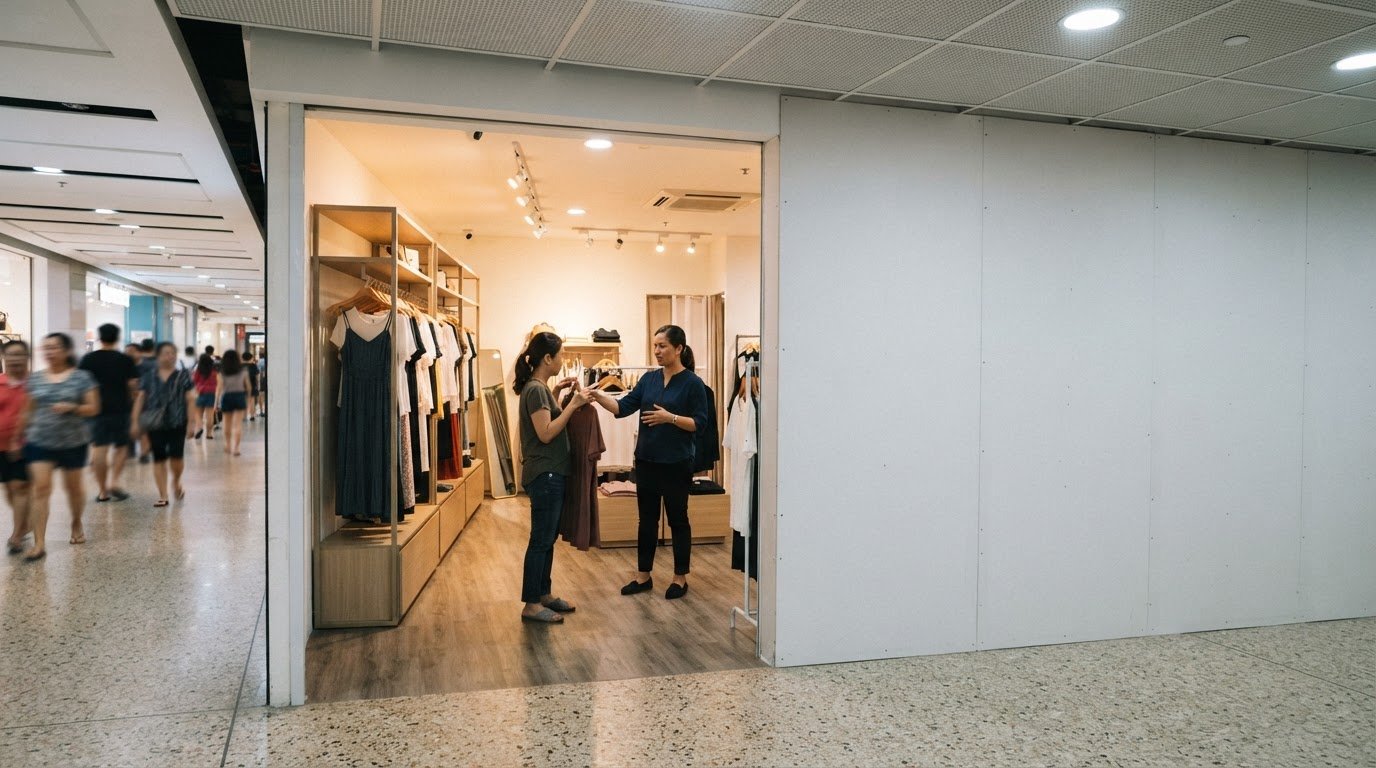
Logistical planning is crucial in high-density areas like the CBD. Noisy works like hacking are usually restricted to after-hours, typically starting after 6:00 PM on weekdays or during weekends. You'll need to book cargo lifts and loading bays weeks in advance to avoid scheduling conflicts. Building management also requires a substantial renovation deposit to cover any potential damage to common areas. Protecting lift lobbies and corridors with proper hoarding or floor protection is a standard requirement. If you damage a common area tile or scratch a lift door, the MCST will deduct the repair cost from your deposit. To ensure your commercial property handover checklist Singapore is complete, you must include a buffer for the "Final Clearance" certificate. This document is issued by the building manager once they've inspected the unit and confirmed that all debris has been removed and common areas are intact. It's the prerequisite for the landlord to release your security deposit.
Step-by-Step Physical Inspection: From Ceiling to Floor
Once the heavy hacking is complete, your focus must shift to the fine details of the unit. To ensure your commercial property handover checklist Singapore is truly effective, you must approach the unit as a series of zones. The goal is to verify that every square inch aligns with the landlord’s original base drawings. This phase is where most disputes occur, as building managers will scrutinize the quality of the restoration work before releasing your deposit.
Zone-Specific Inspection Points
The Ceiling Zone requires an upward-facing audit. You must ensure that all sprinkler heads and smoke detectors are not only functional but also returned to their original grid positions. Air conditioning diffusers and light fixtures should be clean and properly aligned within the ceiling grids. If any grids were bent or damaged during the removal of partitions, they must be replaced to maintain a uniform look.
In the Wall Zone, the focus is on a smooth finish. Every hole from previous shelving or partitions must be patched and sanded. The final coat of "Landlord White" should be consistent across all surfaces. Electrical sockets and data points must be safely terminated and capped with original faceplates. For the Floor Zone, all carpet tiles or vinyl must be removed. If the unit is a bare shell, the cement screed must be level and free of glue residue. In Grade A offices with raised flooring, every panel must be seated correctly without wobbling.
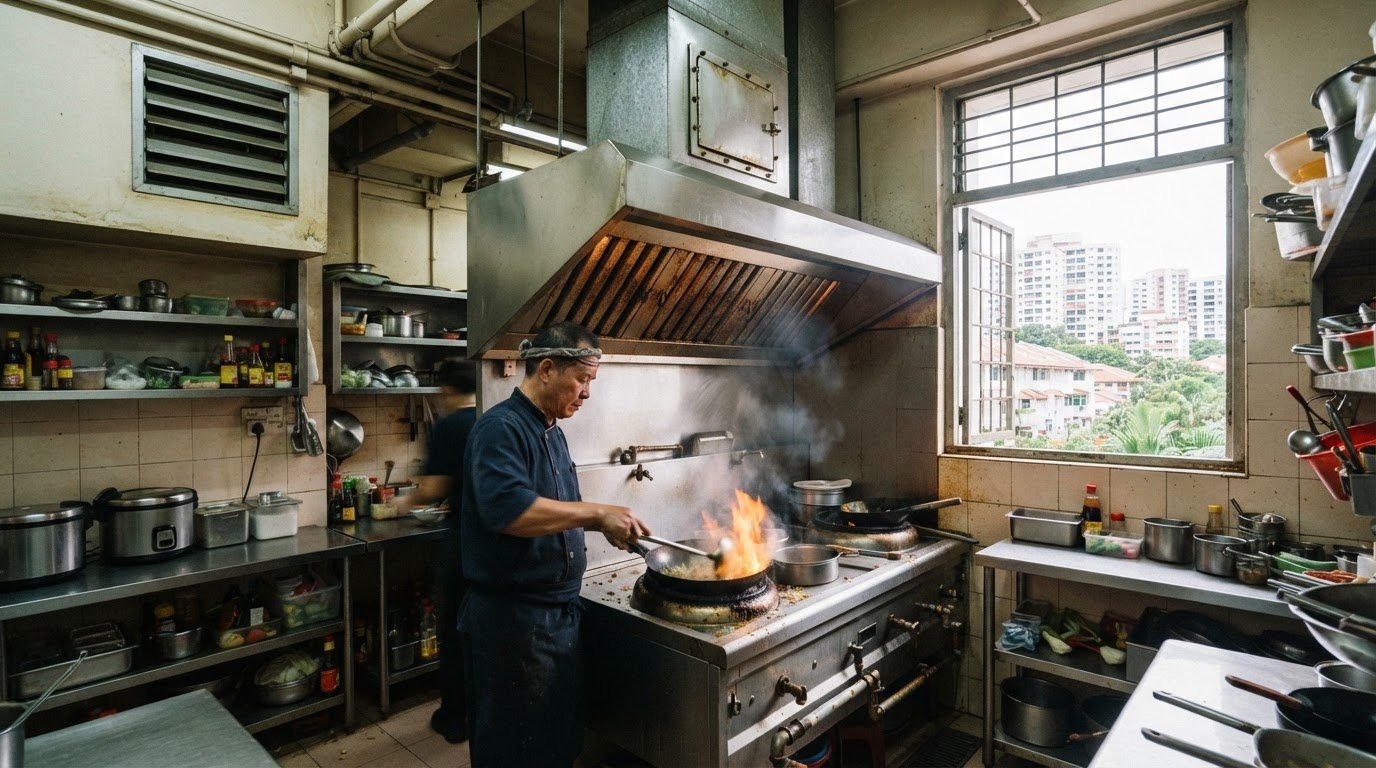
A final commercial property handover checklist Singapore isn't complete without a rigorous check of the Specialty Zones. Server rooms require the decommissioning of dedicated cooling units and fire suppression systems like FM200. Pantries and F&B units need plumbing points capped off and grease traps removed according to environmental standards. Reception areas often feature heavy stone or custom joinery. Our team uses our 10,000 sq ft local carpentry facility to understand the original assembly of these units, ensuring they are removed without impacting the building's structural integrity.
The Final Documentation Set
The physical inspection must be backed by a clear paper trail. You should prepare a Handover Inventory List that catalogs every item remaining in the unit, such as original light fixtures or DB boxes. If there were pre-existing defects from the start of your lease, include a Defects List with photographic evidence to ensure you aren't held liable for them. The Signed Handover Form serves as your final legal protection, signaling that the landlord has formally accepted the premises in its reinstated state.
If you're preparing for a site walk-through and need an expert eye to verify your restoration work, contact our team to schedule a preliminary inspection. We'll help you identify potential red flags before the landlord sees them.
Professional Handover Management: Ensuring a Smooth Transition
Managing the final weeks of a commercial lease is an exercise in precision. Since 1990, JM & SONS has operated as a second-generation family contractor, bringing decades of experience to complex CBD handovers. We've seen how a lack of coordination can lead to missed deadlines and forfeited deposits. Our approach is built on a methodical timeline that guides you from the initial hacking phase through to the final professional cleaning. By using a commercial property handover checklist Singapore businesses can rely on, we ensure every technical and administrative requirement is checked off before the joint inspection.
One of the biggest pain points for tenants is the "hidden cost" of reinstatement. We address this through detailed, transparent quotations that break down every aspect of the work. This accountability ensures there are no surprises when the final bill arrives. We also look for opportunities to save you money. For example, we can coordinate with incoming tenants for "as-is" takeovers. If the new occupant wants to keep certain partitions or built-in units, you save on hacking costs while they save on fit-out expenses. This requires early coordination with the landlord, but it's a practical way to reduce waste and expenses.
Accountability and Clear Communication
We believe that honesty is the foundation of a successful partnership. During the reinstatement process, we provide detailed site photos and regular progress reports. This transparency allows you to stay informed without needing to be on-site every day. Managing after-hours works is another area where our experience pays off. In busy commercial hubs, noisy works must happen when other businesses are closed. Our team is accustomed to these schedules, ensuring minimal disruption to neighboring tenants. Because we maintain in-house construction capabilities and a 10,000 sq ft local carpentry facility, we reduce the risk of sub-contractor delays that often plague smaller firms.
Final Steps: Keys, Access Cards, and Deposit Recovery
The physical work might be done, but the administrative exit is just as important. You must follow a strict protocol for returning access cards, car park transponders, and physical keys. Losing even one card can result in a replacement fee that the landlord will deduct from your deposit. You also need to ensure all utility accounts and telecommunications lines are officially closed or transferred. This prevents you from being billed for the next tenant's usage. Once these final boxes are checked, you are ready for the joint inspection and the return of your security deposit. To get started on your exit plan, you can contact JM & Sons for a comprehensive reinstatement quote and share your floor plans for an accurate assessment.
Securing Your Security Deposit and Peace of Mind
A successful lease exit in Singapore is a technical compliance project that demands strict attention to SCDF fire safety, MCST protocols, and the "original condition" clauses of your contract. It's more than just a move; it's a legal obligation to restore the space. By following a structured commercial property handover checklist Singapore, you protect your business from unreasonable deductions and ensure a smooth transition to your next location.
At JM & Sons, we've prioritized accountability and transparency since 1990. As a second-generation family contractor, we combine deep industry experience with modern safety standards like our BizSafe Level 3 and BCA registration. Our in-house 10,000 sq ft carpentry facility allows us to manage custom restorations efficiently, ensuring your premises meet the landlord's standards. We believe that clear communication and detailed quotations are the only way to build lasting trust during a stressful relocation.
Don't leave your security deposit to chance. Contact JM & SONS to share your reinstatement checklist or floor plan for a detailed quote. We're ready to handle the complexities of your handover so you can move forward with confidence.
Frequently Asked Questions
What does "reinstatement to original condition" actually mean in a commercial lease?
"Reinstatement to original condition" means restoring the unit to the exact state captured in your move-in "Schedule of Condition." This typically requires a "bare shell" restoration where all tenant-added partitions, false ceilings, and custom carpentry are removed. It's a non-negotiable legal requirement in most Singaporean commercial leases. Failing to remove even minor fit-outs can lead to the landlord engaging their own contractor at your expense, which significantly reduces your security deposit return.
How much time should I buffer for reinstatement works before my lease ends?
You should buffer at least four to six weeks for the physical restoration work. However, the entire process, including contractor procurement and MCST approvals, should begin four to six months before your lease expires. This lead time is necessary to manage technical requirements and avoid "holding over" penalties. Starting early ensures you have enough time to complete a thorough commercial property handover checklist Singapore and address any defects before the final joint inspection.
Do I need to hire a BCA registered contractor for my commercial handover?
You must hire a BCA registered contractor for any structural hacking or significant M&E works. Most Grade A office building managements in Singapore mandate that contractors hold both BCA registration and BizSafe Level 3 certification before issuing a "Permit to Work." Using a certified contractor like JM & Sons ensures that the work complies with safety regulations and reduces your liability for any accidental damage to the building's core infrastructure.
Can I leave my renovations for the next tenant instead of reinstating?
You can only leave renovations behind if you secure a written "as-is" agreement between the landlord and the incoming tenant. Without this tripartite agreement, you're legally bound to reinstate the space. Landlords often prefer a bare shell to attract a wider range of new tenants, so don't assume your fit-out adds value. Always verify this with building management early to determine if you can save on hacking and disposal costs.
What happens if I cannot finish the reinstatement before the lease expiry date?
Failing to finish on time usually triggers "holding over" clauses, which often result in double rent charges for every additional day. The landlord may also take possession of the unit and hire their own contractor to complete the reinstatement. These "forced" works are often billed at a premium rate, which the landlord will deduct from your security deposit. It's always better to finish early and allow time for a pre-handover cleaning.
Are fire safety submissions (SCDF) required for reinstatement works?
SCDF submissions are required if your fit-out involved relocating fire safety equipment such as sprinkler heads, smoke detectors, or fire-rated walls. During reinstatement, these must be returned to the original building fire plan. You should consult a Qualified Person (QP) or fire protection specialist to coordinate these works. They'll ensure the system is pressurized and compliant with the Fire Code 2023, which is essential for a successful handover.
How do I ensure my renovation deposit is fully refunded by the MCST?
To secure a full refund of your renovation deposit from the MCST, you must protect all common areas during the hacking phase. This includes using proper floor protection in lift lobbies and corridors. You must also ensure that all construction debris is disposed of correctly at an approved off-site facility. Once the building manager verifies the unit is clear and the common property is undamaged, they'll issue a clearance certificate for your deposit.
What are the most common defects found during a commercial joint inspection?
The most frequent defects involve poor wall finishes and incomplete M&E restoration. Inspectors often find unpatched holes from shelving, "dead" data trunking left in ceiling voids, or uneven cement screed after carpet removal. Another common issue is the incorrect placement of AC diffusers and light fixtures compared to the landlord’s base drawings. Using a detailed commercial property handover checklist Singapore helps you identify and rectify these minor issues before the official joint inspection.
Comments