
Landlord Reinstatement Requirements Singapore: The 2026 Tenant’s Compliance Guide

Your security deposit isn't a guarantee; it's a target for every overlooked partition and unpainted wall in your commercial lease. Most tenants realize too late that "original condition" is a technical standard rather than a matter of opinion. We understand the pressure of facing a tight handover timeline while building management scrutinizes every corner for non-compliance. It's frustrating to deal with ambiguous clauses about fair wear and tear when thousands of S$ are at stake. Navigating landlord reinstatement requirements Singapore demands more than just a cleaning crew. It requires a deep understanding of the latest 2026 SCDF fire safety codes and NEA waste disposal regulations. We promise to clear the fog around these obligations so you can hand over your keys with confidence. This guide provides a direct roadmap through the complexities of professional restoration. We will explore how to manage hacking costs, coordinate fire system certifications, and meet the specific technical demands of your MCST for a successful, stress-free handover.
Table of Contents
What is Landlord Reinstatement? Understanding Your Lease Obligations
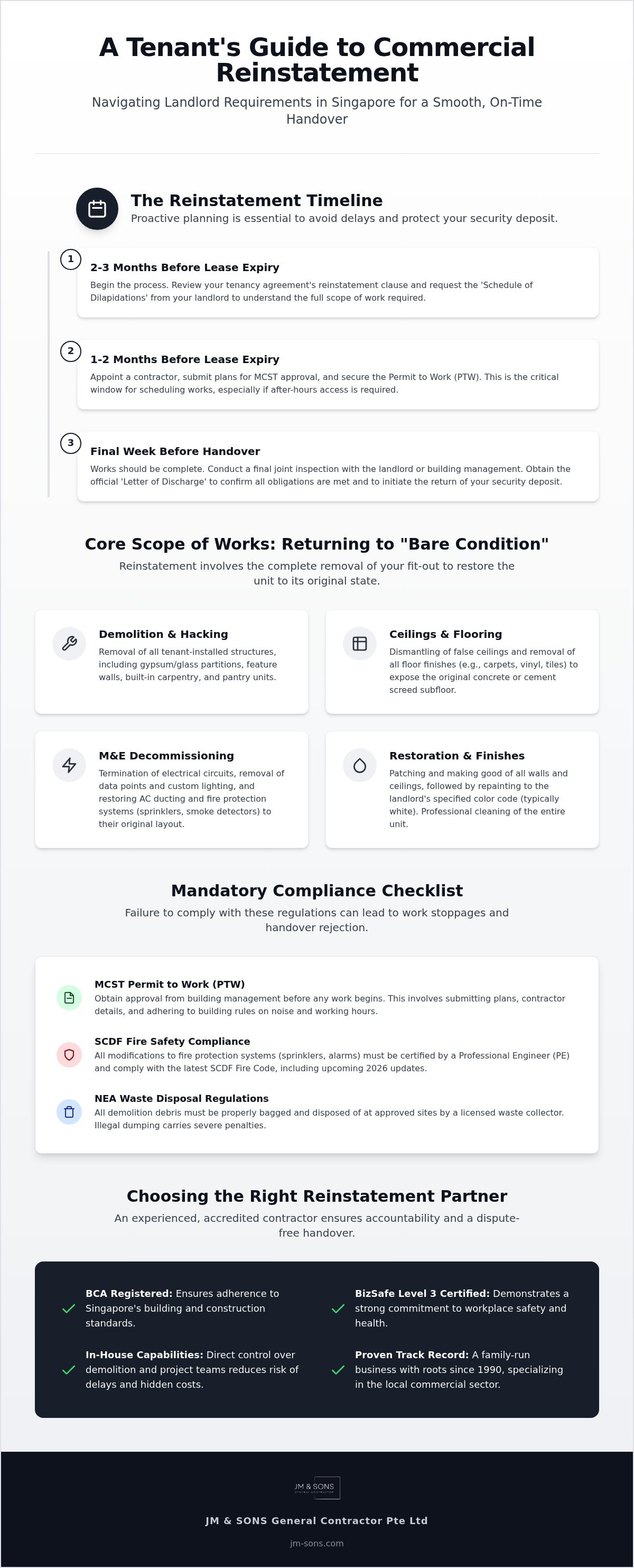
Reinstatement is the process of returning a commercial space to the exact state it was in before your tenancy began. In the local market, this usually means a "bare shell" condition. You must remove every partition, carpet, and custom light fixture you installed during your fit-out. Understanding Your Lease Obligations is the first step because the specific terms are legally binding and buried in your contract. If you fail to meet these landlord reinstatement requirements Singapore, the landlord can use your security deposit to hire their own contractor. This often results in much higher costs and potential legal friction.
Planning should begin at least two to three months before your lease expires. This isn't just about the physical hacking or painting. You need time to get itemized quotes, obtain a Permit to Work (PTW) from the building management, and coordinate with SCDF for fire safety compliance. A Schedule of Dilapidations is often issued by the landlord's surveyor near the end of your term. This document lists every defect or alteration that needs fixing. Ignoring these details can lead to a delay in your move or the forfeiture of your deposit.
Original Condition vs. Fair Wear and Tear
The line between "fair wear and tear" and actual damage is a common source of conflict. In a Singapore commercial context, fair wear and tear refers to the natural deterioration of the property through normal, responsible use. Think of slight fading on the floor from sunlight or minor scuffs in high-traffic areas. However, holes in the walls from shelving or stained carpets are almost always the tenant's responsibility. We always advise clients to refer back to their original site photos from the start of the lease. These photos are your best defense. They prove the state of the unit on day one and prevent landlords from asking for upgrades disguised as repairs.
The Handover Process in Singapore Commercial Real Estate
The final stage involves a joint inspection with the landlord’s representative. For units managed by major developers like CapitaLand or Mapletree, the standards are very strict. They will check if the electrical points are capped safely and if the sprinkler heads are back in their original positions. You should prepare all maintenance manuals and certificates for any M&E works performed. Once the landlord is satisfied, you'll receive a Letter of Discharge. This document is vital. It confirms you've met all landlord reinstatement requirements Singapore and officially releases you from further liability, paving the way for the return of your security deposit.
Core Requirements of a Standard Reinstatement Scope
Meeting landlord reinstatement requirements Singapore often means transforming a vibrant, functional office back into a "white box" state. This isn't a superficial cleanup; it's a technical deconstruction of every addition you've made since day one. The Code of Conduct for Leasing provides a framework for these transitions, but the physical scope is dictated by your specific lease. Typically, this involves the comprehensive removal of all tenant-installed partitions, whether they are gypsum, glass, or timber. You must also dismantle false ceilings and restore original ceiling boards, ensuring they comply with the BCA advisory on suspended ceiling systems updated in September 2026.
Flooring restoration is another major hurdle. You'll need to hack and remove all floor finishes, including carpeting, vinyl, or raised flooring, to reveal the original subfloor. Once the space is cleared of structures, the walls must be repainted to the landlord's approved standard color. This is almost always a specific shade of white or off-white. If you're unsure about the exact paint specifications or the extent of hacking required, you can share your floor plan for a preliminary scope check with our team.
Mechanical and Electrical (M&E) Restoration
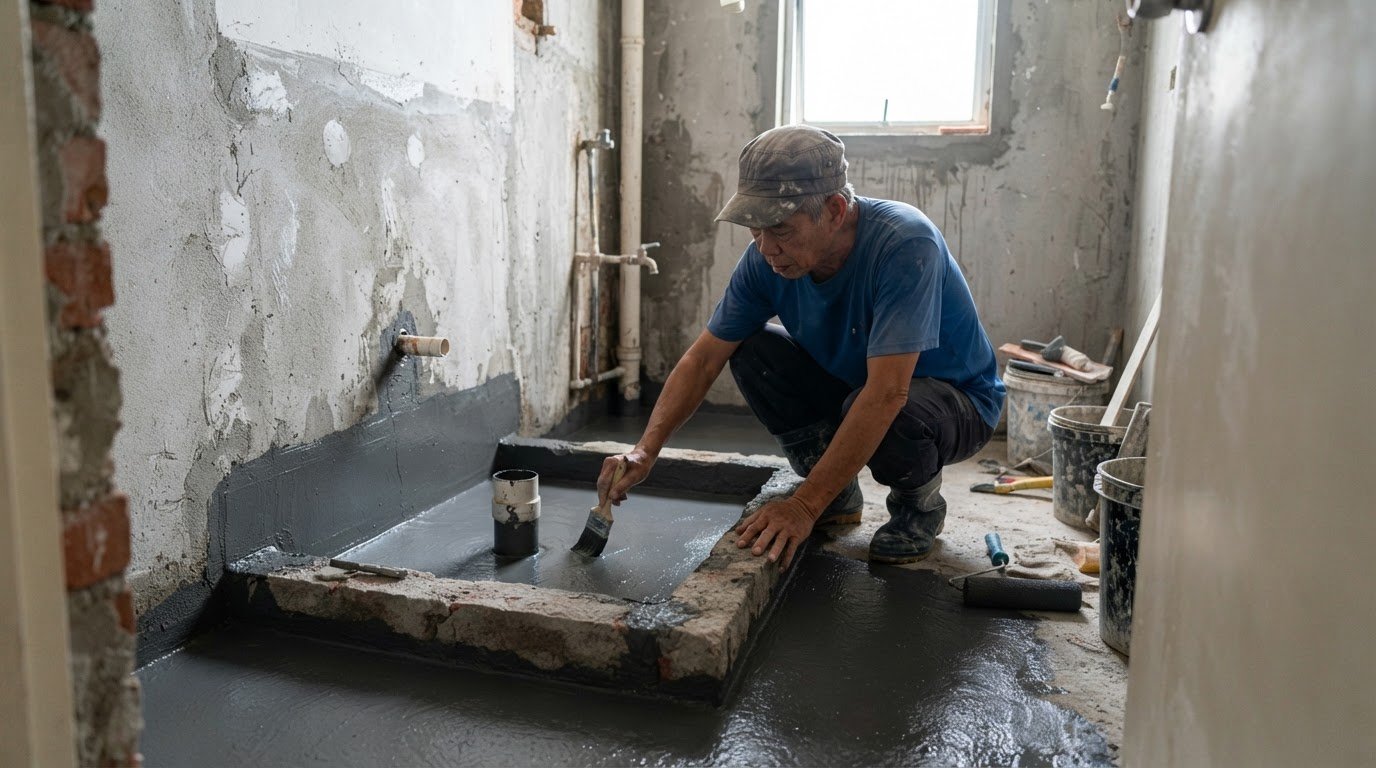
M&E works are the most sensitive part of landlord reinstatement requirements Singapore. You must terminate all electrical circuits and safely cap exposed wiring to prevent hazards. Data points and custom cabling must be entirely decommissioned and removed. Air-conditioning ducting must be restored to the landlord's original layout, which often requires technical coordination to ensure the building's central system remains balanced. For F&B or pantry areas, plumbing and sanitary points must be professionally capped off to prevent leaks after you vacate the premises.
Hacking and Debris Management
The technical process of hacking built-in furniture and masonry requires a steady hand to avoid damaging the building’s structural elements. It's not just about demolition; it's about responsible disposal. National Environment Agency (NEA) regulations, as of late 2026, mandate that all construction and demolition waste generated in Singapore must be processed and sorted locally. Exporting this waste is prohibited. Using an in-house team for hacking ensures that debris is managed according to these strict environmental standards, providing you with the necessary disposal certificates to prove compliance during your final handover inspection.
Navigating Building Management and SCDF Compliance
Building management acts as the primary gatekeeper for every commercial handover. Before a single partition is removed, you must secure a Permit to Work (PTW) from the building’s MCST or Management Office. This isn't just a formality. It's a technical agreement that your contractor will follow the building’s specific house rules. These rules typically include strict "after-hours" work schedules. In most Singapore malls and Grade A offices, noisy works like hacking or drilling are restricted to late nights or weekends. Managing these narrow windows of time is essential to meeting landlord reinstatement requirements Singapore without triggering noise complaints or work stoppages.
Access to the site is usually contingent on your contractor providing proof of Public Liability Insurance and Work Injury Compensation (WICA). Don't assume your contractor can just walk in. You must also coordinate with the building's nominated fire contractor to isolate the fire alarm and sprinkler systems before work begins. This prevents accidental triggers that could lead to building-wide evacuations and heavy fines from the management. We handle this coordination directly to ensure that the dismantling process doesn't compromise the building's overall safety systems.
Fire Safety and SCDF Coordination
Fire safety is the most scrutinized aspect of any reinstatement. Under the 6th Batch of Amendments to the Fire Code 2023, which took effect on September 1, 2026, all restoration works must ensure that fire sprinklers and smoke detectors are returned to their original design intent. If your fit-out involved structural changes or complex partition layouts, you'll need to verify that the restoration meets the latest standards. It's vital to maintain clear fire escape routes during the dismantling phase. Any blockage, even temporary, can result in immediate penalties during a surprise SCDF audit. We focus on ensuring that every sprinkler head is capped or repositioned according to the original fire plan to satisfy landlord reinstatement requirements Singapore.
Managing MCST Requirements for Mall and Office Tenants
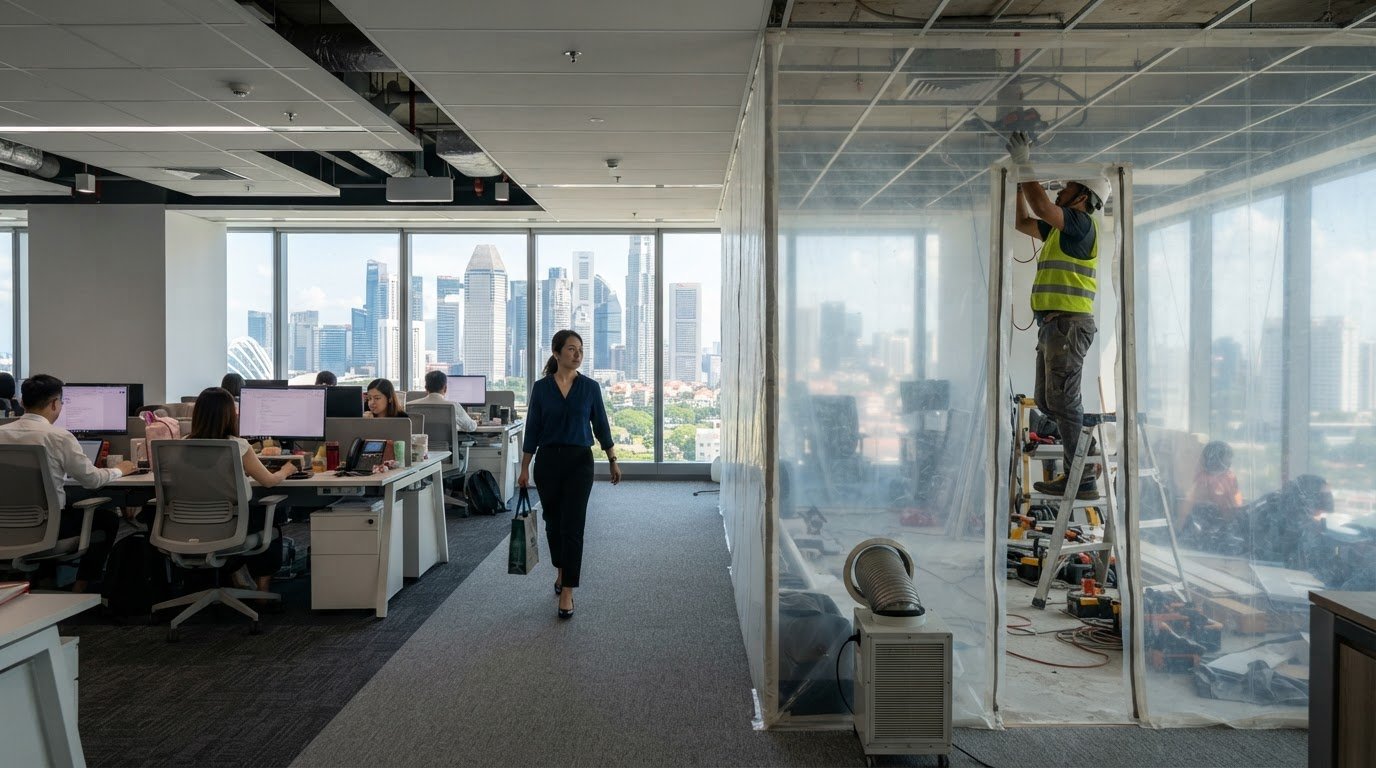
Retail and office tenants face unique logistical hurdles that require careful planning. You must coordinate loading bay access and ensure your contractor uses lift padding to protect common areas during the debris removal phase. Most building managers also require a "reinstatement deposit" before work starts. This sum is held to cover any potential damage to corridors, lift lobbies, or shared ceilings. We prioritize site protection, using dust screens and floor coverings in common areas to ensure your deposit is returned in full. Following the BCA advisory on suspended ceiling systems issued on September 1, 2026, we also ensure that any ceiling restoration is inspected for structural integrity before the final handover.
Avoiding Common Pitfalls and Handover Disputes
Handover disputes often stem from a lack of clarity in the initial agreement between a tenant and their contractor. We often see businesses lured by "thin" quotations that look attractive on paper but omit critical elements like debris disposal or professional M&E termination. When the landlord finds exposed wires or piles of waste on the final day, they won't accept the unit. This forces you into a high-pressure situation where you're paying for emergency fixes while your lease clock ticks down. It's a stressful way to end a tenancy that could have been avoided with a detailed, itemized scope of work.
DIY attempts frequently backfire in the commercial sector. Hiring individual handymen to save a few hundred S$ often leads to a coordination nightmare. If the painter finishes before the electrician caps the points, you'll end up paying twice for touch-ups. Landlords in Singapore prefer a single, accountable contractor who understands the full scope of landlord reinstatement requirements Singapore. Missing your handover date by even 24 hours can trigger "liquidated damages" clauses, which often cost double your daily rent. A final walkthrough 48 hours before the official inspection is your best insurance against these costly surprises.
Budgeting for Reinstatement: Hidden Costs to Watch
Your budget must account for more than just labor and materials. Building management often charges administrative fees for processing permits, and you'll likely have to pay the building's nominated contractors for fire system and chilled water works. These costs are non-negotiable and vary significantly depending on the building's age and complexity. Specialized hacking for heavy-duty floor tiles or custom-built mezzanines also carries a premium. Understanding Office Fit-Out Costs in Singapore helps you anticipate how the reverse process, deconstruction, will impact your final exit budget. We recommend setting aside a contingency fund for these mandatory third-party charges.
Documentation and Evidence
A solid paper trail is your strongest defense against deposit disputes. Keep every email from the MCST and every signed inspection report from your contractor throughout the project. Using a detailed handover checklist that mirrors your lease agreement ensures nothing is missed during the rush to vacate. Major landlords often require "as-built" drawings to verify that the M&E systems have been returned to their original configurations. Without these drawings, getting a final sign-off can be nearly impossible. If you're struggling to locate your original floor plans or need help interpreting a complex schedule of dilapidations, WhatsApp us your lease documents for a professional review. Having the right evidence ready prevents the landlord from making arbitrary claims against your security deposit.
Partnering with an Ethical Reinstatement Contractor
Choosing a contractor to handle your exit is as critical as the team that handled your initial fit-out. Many businesses focus solely on the bottom line, but the cheapest quote often carries the highest risk of deposit forfeiture. You need a partner who takes full responsibility for the physical work and the administrative hurdles. Landlords and building managers in Singapore have little patience for contractors who don't follow house rules or fail to meet technical standards. When you hire a firm with in-house hacking and project teams, you eliminate the "blame game" that often happens with subcontracted labor. Accountability is the foundation of a smooth handover.
Professional credentials are non-negotiable in the commercial sector. A contractor’s BCA registration and BizSafe Level 3 certification are indicators of their commitment to safety and quality. These aren't just badges; they are often mandatory requirements for entering Grade A offices and major shopping malls. A contractor with a proven track record understands how to navigate landlord reinstatement requirements Singapore for major developers like CapitaLand or Mapletree. They know the specific expectations of different MCSTs, from lift protection protocols to the exact way M&E points must be capped. This specialized knowledge prevents the back-and-forth revisions that delay your final sign-off.
The JM & SONS Difference: Accountability Since 1990
We've spent over 35 years refining our process to give tenants peace of mind during their relocation. As a second-generation family business, we prioritize transparency and long-term relationships over quick wins. You can learn more About JM & SONS and our journey from a small carpentry team to a full-service commercial contractor. We operate our own 10,000 sq ft local carpentry facility, which allows us to manage the dismantling and disposal process with high efficiency. Our quotations are detailed and itemized from the start. We don't believe in "hidden costs" that surprise you on the final day. By controlling our own hacking and project teams, we ensure that every task, from floor removal to wall repainting, meets the landlord's approved standard the first time.
Next Steps: Getting Your Handover Started
The best way to manage landlord reinstatement requirements Singapore is to start early. Don't wait until the final month to seek professional advice. We recommend preparing your original floor plans and your lease's schedule of dilapidations for a comprehensive site assessment. An early site visit allows us to identify potential compliance issues, such as non-standard partitions or complex fire safety layouts, before they become urgent problems. This proactive approach gives you a realistic timeline and budget for your exit. If you're ready to begin the process, WhatsApp JM & SONS to share your reinstatement checklist and get a detailed quote. We are here to help you navigate the complexities of your lease handover with honesty and technical expertise.
Secure Your Security Deposit with a Compliant Handover
Meeting landlord reinstatement requirements Singapore isn't just about demolition; it's about meticulous coordination with building management and safety authorities. You've seen that starting the process early and documenting every stage with itemized reports can save you from costly liquidated damages. A successful handover requires balancing your specific lease obligations with the latest 2026 fire safety and waste disposal standards. It's about leaving the space in a condition that invites no disputes and ensures your security deposit is returned in full.
Since 1990, we've helped tenants navigate these complex transitions with a focus on honesty and technical precision. As a BCA registered contractor with BizSafe Level 3 certification, we manage every hack and repair through our in-house teams and 10,000 sq ft local carpentry workshop. This level of control ensures we deliver the accountability you need to meet professional restoration standards. If you're ready to clear your space and move forward without the stress of hidden costs, WhatsApp our specialists at +65 8913 2620 for a site assessment. We'll help you identify compliance issues early so you can focus on your next chapter with peace of mind.
Frequently Asked Questions
What is the standard reinstatement period for commercial leases in Singapore?
The physical works typically take between two to four weeks depending on the unit size and complexity. However, you should begin the planning phase two to three months before your lease expires. This allows enough time to secure the necessary Permit to Work from the MCST and coordinate with nominated contractors. Building management often requires all works to be completed at least seven days before the official handover date.
Can I leave behind improvements that the next tenant might want?
You can only leave fit-outs behind if you have explicit, written consent from the landlord. Most landlords insist on a bare shell return to provide a blank canvas for the next occupant. If the landlord agrees to keep your partitions or flooring, ensure you receive a formal waiver. Without this document, you remain legally responsible for landlord reinstatement requirements Singapore regardless of the next tenant's preferences.
Is it mandatory to use the building's nominated fire contractor for reinstatement?
Yes, it is mandatory for any works that affect the building’s central fire alarm, smoke detectors, or sprinkler systems. While you can hire your own contractor for hacking and painting, only the nominated specialist is authorized to touch the building's life safety network. This ensures the entire system remains balanced and compliant with SCDF regulations. Your main contractor should manage the coordination with these nominated parties directly.
What happens if the landlord refuses to sign off on the reinstatement works?
If the landlord refuses sign-off, they will issue a list of defects that you must rectify immediately. You may be charged "holding rent" or liquidated damages for every day the unit remains unaccepted beyond your lease expiry. To prevent this, refer to your original site photos to resolve disputes over fair wear and tear. It's vital to fix all highlighted issues before the final lease deadline to protect your deposit.
How much does office reinstatement typically cost per square foot in 2026?
Costs are highly variable and depend on partition density, flooring types, and M&E complexity. New 2026 NEA waste disposal regulations and SCDF fire safety amendments also influence the final investment required for a compliant handover. We don't provide generic per-square-foot rates as they can be misleading. Instead, we recommend getting an itemized quotation based on your specific Schedule of Dilapidations to ensure all landlord reinstatement requirements Singapore are covered without hidden fees.
Do I need a permit for hacking works in a commercial building?
Yes, a Permit to Work (PTW) from the building's MCST or Management Office is strictly required before any hacking begins. This permit governs work hours, noise limits, and debris disposal routes. For structural alterations, you might also need endorsements from a Professional Engineer (PE). Your contractor must submit their BizSafe certification and insurance documents, such as Public Liability and WICA, to the management office before the permit is approved.
What is the difference between bare shell and fitted condition for handovers?
Bare shell condition means the unit is returned with all tenant-installed partitions, carpets, and custom fixtures removed, leaving only the original cement screed and ceiling. Fitted condition allows you to leave certain fit-outs like meeting rooms or pantry units intact for the next tenant. Most Singapore commercial leases default to a bare shell requirement. Always check your specific lease agreement to confirm which state the landlord expects during the final inspection.
How can I ensure I get my full security deposit back?
Obtaining your full deposit requires meeting every technical specification in the landlord's checklist and securing a formal Letter of Discharge. Conduct a joint pre-inspection with your contractor to identify and fix minor defects before the landlord's official walkthrough. Providing "as-built" drawings and fire safety certificates promptly demonstrates your compliance. When you follow the landlord reinstatement requirements Singapore meticulously, you leave the landlord with no grounds to withhold your funds.

Comments