
Reinstatement Checklist: 2026 Guide for Singapore Tenants

The last stage of a tenancy can put your security deposit at risk before the final inspection. Reinstatement isn’t just about removing partitions and flooring. Your lease may require specific items to be returned to their original condition, including M&E services and fire safety provisions. This reinstatement works checklist helps you identify what to clarify before work begins.
It’s understandable if the phrase “original condition” feels unclear. The answer may depend on your tenancy agreement, the unit’s condition at handover and any approvals for alterations. Building management rules on work hours, permits and debris disposal can also affect your plan and budget.
Use this guide to organise the work, prepare the unit for a joint inspection and reduce the risk of avoidable disputes with your landlord. It covers how to review the lease, document existing conditions, coordinate building requirements and check key reinstatement items, including electrical, mechanical and fire safety systems. Confirm project-specific requirements with your landlord, building management and relevant authorities before work starts.
Table of Contents
What Are Reinstatement Works in Singapore?
Before handing back a commercial unit, tenants may need to remove alterations and return the space to the “bare shell” or another agreed condition. The exact scope depends on the lease. It can include hacking partitions or added floor finishes, removing tenant-installed fixtures, and restoring mechanical, electrical and plumbing (MEP) services. Don’t assume every item must be removed, or that a previous tenant’s fit-out counts as the unit’s original state.
Your tenancy agreement (TA) is the primary roadmap. A lease sets out the terms of the landlord-tenant relationship. Review the tenancy agreements definition for general context, then rely on your signed documents for the unit-specific requirements. Check reinstatement clauses, approved alteration records and any written agreements made during the tenancy. If the wording is unclear, ask the landlord or managing agent to confirm the expected scope in writing. This article offers practical guidance, not legal advice.
The financial stake can be substantial. If your TA requires a security deposit equivalent to 3 to 6 months’ rent, unresolved reinstatement items may complicate its return. The amount and any deductions depend on your agreement and the handover outcome. A detailed reinstatement works checklist helps you track the agreed scope and identify unanswered questions before work starts.
The “Original Condition” Clause Explained
Separate ordinary use from changes that the lease requires you to remove or restore. “Fair wear and tear” may be treated differently from tenant alterations, but the contract’s wording and available evidence matter. Compare the unit with its original Handover Condition Report, including notes about finishes, fixtures and services. Photos taken at the start of the tenancy can help show what was already present, what changed and the condition of the space before reinstatement.
Timeline: When Should You Start?
Start planning 4 to 6 weeks before lease expiry. Building management permit approvals can take several weeks, and any required authority coordination or inspection may affect the sequence. Confirm current requirements and expected timing with building management and relevant authorities, including whether SCDF involvement applies to your scope. Schedule work around approved access and work hours, then leave time for a joint inspection and any agreed remedial items.
Missing the agreed handover date can expose you to holdover rent under the TA. Some agreements may set a higher rate, sometimes described as double rent, but don’t assume that applies universally. Check the clause and confirm the handover date with the landlord or managing agent early. A clear scope, written confirmations and realistic scheduling can help reduce last-minute disputes and delays.
Reinstatement Works Checklist: Walls and Floors
For an office or commercial unit, reinstatement often means removing tenant-installed finishes and making good the affected areas. Start with the lease, alteration records and handover documents. They help distinguish what must be removed from what should remain, so the work doesn’t go beyond the agreed scope.
Use this part of your reinstatement works checklist to review:
Temporary gypsum, glass or timber partitions, including their frames and fixings.
Added carpet, vinyl, carpet tiles or raised flooring, where removal is required.
Tenant-installed ceiling boards, wall finishes, custom shelving, reception desks and other built-in carpentry.
Damage or fixing holes left behind, with the required make-good finish confirmed before work begins.
Compare each item with the unit’s original condition. A glass meeting-room partition, for example, may leave floor tracks, wall anchors and ceiling fixings after removal. Include these affected areas in the scope, not just the partition panels.
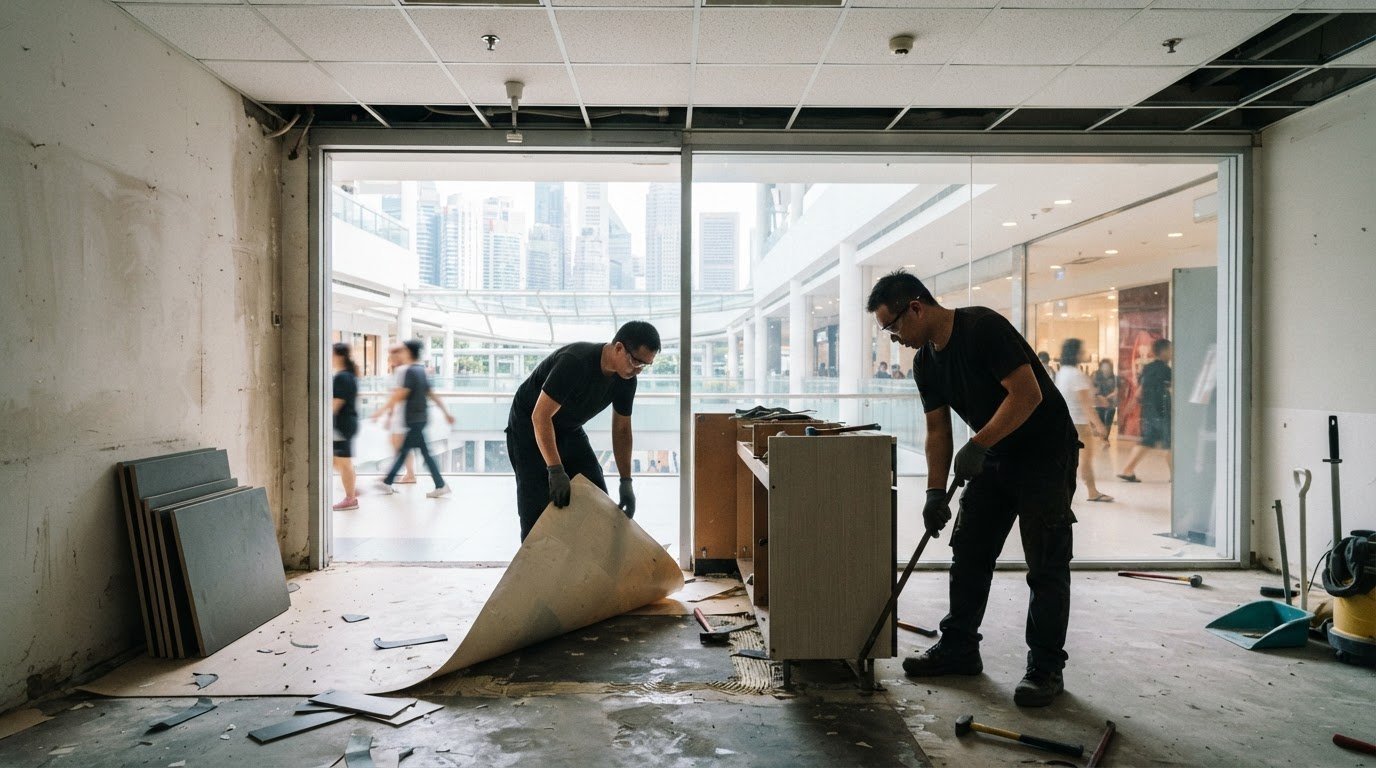
Hacking and Partition Removal
Glass panels and aluminium frames need controlled dismantling to reduce the risk of breakage and damage to retained finishes. Confirm access, work hours and debris handling with building management. For walls and columns, distinguish tenant-installed partitions from original building elements. Don’t cut into or alter structural components based on assumption. Check the approved scope with the landlord and relevant professionals. The Building and Construction Authority (BCA) provides building works guidance, but confirm project-specific requirements with the relevant parties.
“Make good” can mean more than filling visible holes. Clarify whether the landlord expects patching only or a matched finish across the affected wall, ceiling or column. Record the agreed standard in writing and include it in the contractor’s scope.
Flooring Restoration
Removing carpet or vinyl may expose adhesive, uneven patches or damage to the original floor. Ask whether adhesive residue must be scraped away and whether the original screed should be left as-is, ground or polished. Don’t assume a bare floor automatically meets the handover standard. If original tiles are cracked or missing, agree on the repair approach and acceptable match before sourcing replacements.
Before work starts, mark each area for removal, retention or repair on a floor plan or site photos. A clear scope makes quotations easier to compare and reduces misunderstandings at inspection. If you need help defining the architectural reinstatement scope, discuss your reinstatement requirements with JM & SONS General Contractor Pte Ltd.
Mechanical, Electrical, and Plumbing (MEP) Checklist
MEP reinstatement needs careful coordination. A clean-looking ceiling or wall doesn’t confirm that the services behind it have been restored correctly. Compare the existing layout with handover records, approved alteration plans and the landlord’s reinstatement requirements. Confirm the scope with building management and relevant professionals before disconnecting or altering any service.
Include these checks in your reinstatement works checklist:
Identify tenant-added electrical wiring, data points, trunking, conduits and socket outlets for removal or safe termination.
Confirm whether the Distribution Board (DB) must return to its original configuration. Document the required arrangement before changes are made.
Check whether air-conditioning fan coil units (FCUs) were moved and whether they must be returned to their former positions.
List added plumbing points and pantry sinks for removal, with water lines properly capped as agreed.
Confirm which original lighting fixtures must be reinstalled and tested.
Don’t treat “make safe” as simply cutting off exposed wires or pipes. The work should leave services in the condition required for handover and avoid affecting systems that remain in use. Keep records of what was removed, retained and tested.
Fire Safety and SCDF Coordination
If tenant works changed sprinkler positions, smoke detectors or fire alarm components, confirm the reinstatement scope with building management and the relevant fire safety professionals. Sprinklers may need to be returned to the agreed layout, while added detectors or alarm devices may need removal and the system restored. Don’t adjust or disconnect fire protection equipment without confirming the approved approach. Requirements can depend on the premises and work scope, so verify current SCDF requirements where applicable. For context on food and beverage premises, see commercial fire safety coordination.
Electrical Restoration
Remove tenant-added trunking, conduits and outlets only where the agreed scope calls for it. Check that retained or reinstated lighting works, and record the DB condition at handover. Ask whether a Licensed Electrical Worker (LEW) should inspect or certify the electrical work for your project. Confirm the applicable requirements with the landlord, building management and relevant professionals rather than assuming one process applies to every unit.
Clear documentation helps avoid disputes over hidden or incomplete work. Ask your contractor to itemise the MEP scope, including what will be removed, reinstated, tested and excluded. This makes responsibilities easier to check before the joint inspection.
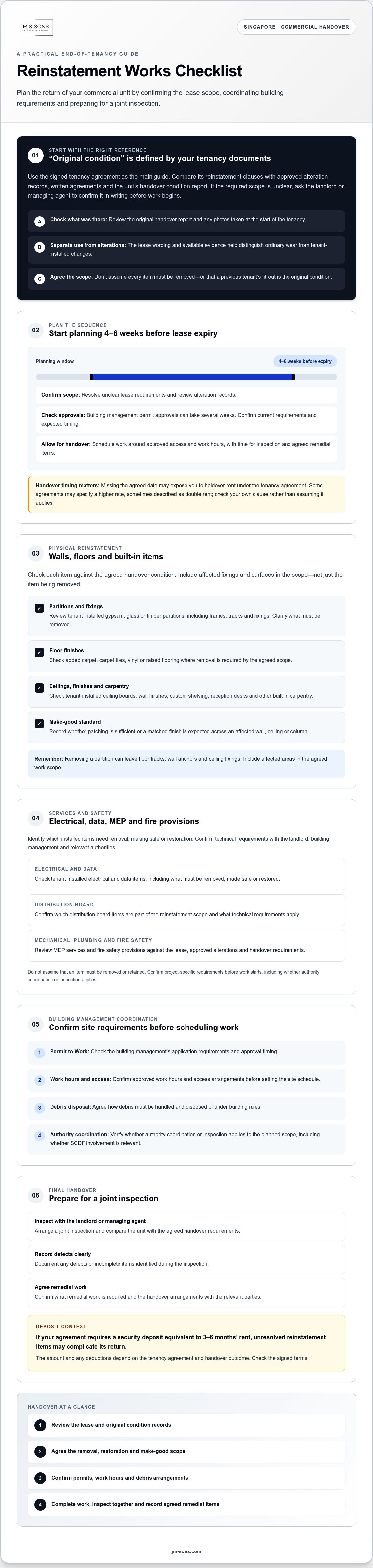
Managing Building Management (MCST) Requirements
Building management requirements can shape the work sequence, access arrangements and handover condition. Before scheduling dismantling, ask the managing agent for the current Permit to Work (PTW) process, required documents, review time and approved work hours. Some buildings restrict noisy work to specific periods, which may include evenings or weekends, but permitted hours vary. Get the rules in writing before confirming your programme.
Add these items to your reinstatement works checklist:
Submit the PTW application and any required contractor, worker or method details before site work begins.
Confirm approved work hours, the lift booking process and the route for moving materials and debris.
Ask what protection is required for common areas, such as hoarding, floor coverings and lift padding.
Confirm where renovation debris must go, including whether the building specifies a chute, bin or collection arrangement.
Plan protection and disposal alongside the work scope, not as last-minute additions. For example, dismantling bulky partitions may require lift access and protection along the route from the unit to the loading area. Building rules differ, so check the latest instructions directly with management.
Deposits, Insurance and Contractor Documents
Some buildings require a renovation deposit or proof of insurance before issuing a permit. Confirm the amount, payment party, refund conditions and required documents with the managing agent. Don’t assume the same process applies across properties. Ask your contractor what insurance cover is in place and whether the building requires specific proof, such as a certificate of insurance. Keep the permit, payment and insurance records with your project documents. For related fit-out planning, see this commercial renovation and reinstatement service information.
Debris Disposal and Site Clearing
Don’t put renovation debris in common household waste bins unless building management expressly permits it. Confirm approved arrangements for bulky items and ask how any materials that may need special handling should be identified and managed. Singapore’s National Environment Agency requires construction and demolition waste to be processed and sorted locally for recycling, so confirm the applicable disposal arrangements with your contractor and building management.
Agree what “broom-clean” means for your handover. Usually, the practical aim is to remove loose debris, dust and leftover materials, but the landlord or management may specify a different standard. Include final site clearing in the written scope and check it before the joint inspection. For help coordinating commercial reinstatement works and building requirements, discuss your reinstatement scope with JM & Sons.
The Final Handover: Joint Inspection and Deposit Recovery
The joint inspection is where the agreed reinstatement scope is checked against the condition of the unit. Arrange it with the landlord or managing agent before your tenancy ends, allowing time to address any items they identify. Bring the signed scope of works, relevant alteration records and original handover report so both parties can refer to the same documents.
Prepare for the Joint Inspection
Walk through the space with your contractor before the landlord’s inspection. Check completed make-good works, confirm agreed services are in the required condition, and test any utilities or fixtures that are meant to remain functional. Keep the original Handover Condition Report and dated site photos ready for comparison.
If the landlord or managing agent identifies outstanding items, record each one in a written defects list. Note the location, required action and agreed completion date. Clarify whether a follow-up inspection is needed after the remedial work, and keep dated photos or other completion records. This gives both sides a clear reference and helps prevent small defects from becoming wider disagreements.
Completion Documents and Deposit Release
Ask the landlord or managing agent to confirm acceptance of the handover in writing. If a Certificate of Completion is required under the project or building process, confirm who issues it and what documents they need. Once the agreed handover steps are complete, request the security deposit release in writing and follow the process and timing set out in your tenancy agreement. The deposit’s return and any deductions depend on the agreement and the outcome of the handover, so keep records of all communications.
Choosing an Accountable Reinstatement Contractor
When comparing contractors, look for a clear, itemised scope that follows the lease and handover records. Check that the quotation identifies included work, exclusions and how changes will be handled. For commercial units, clarify who will coordinate site preparation, removal, making good, reinstatement of services, debris disposal and final handover. JM & SONS General Contractor Pte Ltd provides commercial reinstatement works, including the removal of partitions and site clearing for office and retail tenants. For an overview of commercial reinstatement services, review the scope relevant to your unit.
Use your reinstatement works checklist to track inspection findings, remedial actions, completion documents and the deposit request. For help planning commercial reinstatement works, share your handover requirements with JM & Sons.
Plan a Clear, Confident Handover
A successful commercial reinstatement starts with the lease, not the first day of hacking. Confirm what “original condition” means for your unit, then coordinate architectural work, M&E restoration, building management requirements and inspection expectations. Keep records of the agreed scope and any defects so both sides have a clear basis for handover and deposit discussions.
Use this reinstatement works checklist to track tasks, responsibilities and inspection items. Requirements can vary by lease and building, so confirm project details with your landlord, managing agent and relevant authorities.
JM & SONS General Contractor Pte Ltd provides commercial interior fitting-out and reinstatement works in Singapore. To discuss your commercial handover scope, contact JM & Sons with your floor plan, site photos or checklist.
Suggested meta title: Reinstatement Works Checklist for Singapore TenantsSuggested meta description: Follow this practical checklist for commercial reinstatement in Singapore, from lease requirements and building management coordination to inspection and handover.
Frequently Asked Questions
Do I really need to reinstate if the next tenant wants my fit-out?
Not unless your landlord agrees to waive or change the reinstatement requirement in writing. A prospective tenant’s interest in keeping partitions, flooring or other fit-out items doesn’t automatically amend your tenancy agreement. Ask the landlord or managing agent to confirm which items can remain, who will accept responsibility for them and whether the agreement affects your handover obligations. Keep written confirmation and update the work scope before arranging removal or restoration.
How much does reinstatement work cost per square foot in Singapore?
There isn’t a reliable per-square-foot figure without reviewing the unit and required scope. Costs can depend on what must be removed, the condition of retained finishes, M&E and fire safety work, access arrangements, building management requirements and debris handling. Ask for an itemised quotation based on your lease, site information and handover records. Compare inclusions, exclusions and how additional work will be priced rather than relying on a rate alone.
Can I use my own office movers to do the reinstatement hacking?
Don’t assume an office moving team can carry out reinstatement hacking. Moving furniture and dismantling or altering partitions, flooring and building services involve different scopes and may be subject to building management’s permit, work-hour and contractor requirements. Check the proposed work with your managing agent before appointing anyone. Confirm who will handle removal, making good, debris disposal and any required service restoration, and ensure each responsibility is clearly recorded.
What happens if I cannot complete the reinstatement before my lease ends?
You may face consequences set out in your tenancy agreement, which can include holdover rent or other claims. The outcome depends on the contract and circumstances, so review the relevant clauses and seek appropriate advice if needed. Contact the landlord or managing agent as soon as a delay becomes likely, explain what remains outstanding and request written agreement on any revised handover date. Don’t assume extra time has been approved until it’s confirmed.
Who is responsible for fire safety submissions during reinstatement?
Responsibility depends on the lease, the work scope and the building’s approval process. Confirm with the landlord or managing agent whether reinstatement affects fire protection systems or requires submission coordination, and check current requirements with the relevant authorities. Where professional plans or endorsements are needed, clarify who will arrange the appropriate qualified professional. Keep approvals and completion records with your project documents. Don’t disconnect or alter fire safety systems without confirming the authorised process.
Does “broom-clean” condition include professional carpet cleaning?
Not necessarily. “Broom-clean” can be understood differently by landlords and building managers, and it doesn’t automatically specify professional carpet cleaning. Check the tenancy agreement, handover requirements and any written instructions for the premises. Ask whether carpets are to be removed, retained or cleaned, and document the agreed standard before arranging work. If a carpet remains in the unit, confirm whether visible stains, dust or other condition issues need separate attention.
Can the landlord deduct from my deposit for “fair wear and tear”?
Whether a deduction is appropriate depends on the tenancy agreement, the unit’s condition and the evidence available. Compare the original Handover Condition Report and start-of-tenancy photos with the condition at return. Ask the landlord or managing agent to identify any proposed deduction and explain its basis in writing. If you disagree, refer to your agreement and consider getting suitable legal advice. This is general information, not a determination of your rights.
Is BizSafe certification required for reinstatement contractors in Singapore?
Don’t assume BizSafe certification is a universal requirement for every reinstatement project. Building management may set its own contractor and documentation conditions, so check the current Permit to Work requirements before work begins. Confirm which safety credentials, insurance documents and other records the building requires for your project.
For commercial reinstatement works in Singapore, contact JM & Sons to discuss your lease requirements and handover scope.


Comments