
HDB Hacking Contractor in Singapore: A Guide to Safe & Legal Demolition
- JM & SONS
- 3 days ago
- 12 min read

Updated: 20 hours ago
What if the wall you plan to remove is actually holding up more than just your kitchen cabinets? In Singapore, the line between a beautiful open-concept layout and a structural disaster is thinner than many homeowners realize. Finding a reliable HDB hacking contractor Singapore is not just about getting the job done; it's about ensuring your home remains safe and your renovation stays within the law. You want a clear, modern space, but the fear of damaging a load-bearing pillar or facing a heavy fine from HDB can make the process feel overwhelming.
We understand that you want peace of mind during this loud and messy phase. It's natural to worry about noise complaints or hidden disposal fees that inflate your budget. This guide explains HDB hacking regulations, permit timelines, and why a direct masonry contractor is the safer choice for your flat’s integrity. We'll walk you through the practical steps to achieve a successful demolition without the stress of non-compliance. Always verify specific permit details with HDB or the BCA before starting. You'll learn to navigate the process, from structural boundaries to efficient debris removal, with complete confidence.
Table of Contents
Understanding HDB Hacking Regulations in Singapore
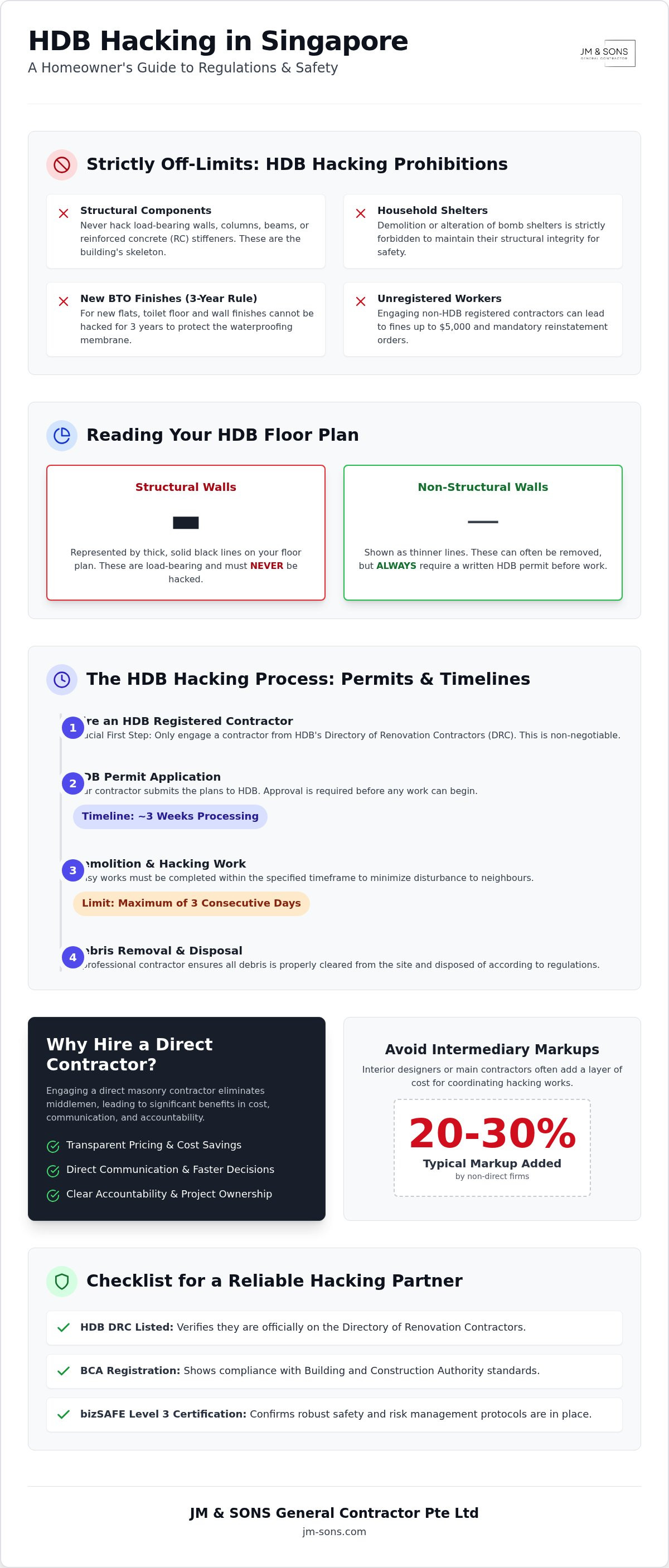
Hacking isn't just about swinging a sledgehammer. It encompasses the removal of internal walls, floor finishes, and built-in fixtures. Every action must align with the Housing & Development (Renovation Control) Rules 2006. This legal framework ensures that your vision for a modern, open-concept home doesn't compromise the safety of your neighbors or the building's lifespan. It's about responsibility as much as it's about aesthetics.
You must only engage an HDB hacking contractor Singapore who is listed on the official Directory of Renovation Contractors (DRC). This registration is a badge of accountability. It means the firm has undergone training to understand HDB's specific construction standards and safety protocols. Engaging an unregistered worker is a serious offense. You could face fines of up to $5,000; additionally, you'll likely be ordered to restore the flat to its original condition at your own cost. We've seen homeowners face significant stress because they tried to cut corners with unregistered labor. It simply isn't worth the risk.
Structural vs. Non-Structural Walls
Identifying which walls can be removed is your first priority. Look at the floor plan provided by the Housing and Development Board (HDB). Structural walls are represented by thick, solid black lines. These are load-bearing members that carry the weight of the floors above you. They can't be hacked, sliced, or tampered with under any circumstances. Non-structural walls are usually thinner lines or shaded boxes on the plan. While these are safer to remove, you still need a written permit before work begins. For complex reconfigurations, an HDB hacking contractor Singapore might recommend consulting a Professional Engineer (PE) to ensure the proposed changes don't affect the overall stability of the block.
Disallowed Hacking Works in HDB Flats
Certain parts of your flat are strictly protected to maintain the building's integrity. You cannot hack structural beams, columns, or reinforced concrete (RC) stiffeners. These are the skeleton of the structure. Household shelters, commonly known as bomb shelters, are also entirely off-limits for hacking or wall removal. If you've just collected keys for a new BTO flat, remember the three-year rule. You aren't allowed to hack or replace the toilet floor and wall finishes during this period. This protects the waterproofing membrane and prevents leaks into the unit below. Always verify these technical details with HDB or your building management before you commit to a renovation layout.
Types of Works Handled by a Direct Masonry Contractor
A direct masonry contractor manages the heavy lifting that sets the stage for your interior design. While many people search for an HDB hacking contractor Singapore to simply tear down walls, a professional team handles a much broader scope. This includes merging rooms to create larger living spaces or hacking kitchen walls for that sought-after open-concept look. It's about precision. We don't just break things; we prepare the site for what comes next.
The work often moves from destruction to preparation. Once walls or floors are cleared, the transition to masonry begins. This involves re-screeding and leveling the floor to ensure a perfectly flat surface for new tiles or vinyl. Without professional leveling, your new flooring will eventually crack or feel uneven underfoot. This foundational work is where our 30 years of experience ensures your home stays structurally sound.
Floor and Wall Tile Hacking
Removing old tiles requires a delicate balance of force and finesse. You want to strip away the ceramic or porcelain without gouging the concrete sub-floor beneath. If the sub-floor is damaged, the repair costs can rise quickly. It's also vital to respect HDB’s thickness limits for new floor finishes. Generally, the total thickness of the floor finish and screed should not exceed 50mm. In wet areas like toilets, hacking is just the first step. Proper waterproofing must be applied immediately after hacking to prevent future leaks to the unit below. If you're unsure about the condition of your floor, you can ask us for a site assessment to avoid surprises.
Dismantling and Disposal Services
Beyond the masonry, we handle the dismantling of built-in wardrobes, kitchen cabinets, and false ceilings. These structures are often bulky and require careful removal to avoid damaging existing electrical wiring or plumbing. Safety is our priority during this phase. We ensure that partitions and temporary structures are taken down without compromising the surrounding areas.
Managing the aftermath is just as important as the hacking itself. Construction debris can't just be left in the corridor or thrown into the estate's bin center. All waste must be transported to NEA-approved dumping locations. We also take great care to protect common areas. This means laying down protective sheets in the lift and corridors and using dust screens to keep the rest of your home as clean as possible. It's a messy job, but a disciplined approach makes it manageable for you and your neighbors.
Why Hire a Direct Masonry Contractor Singapore?
Choosing an HDB hacking contractor Singapore is a strategic decision that affects both your renovation budget and the safety of your property. When you engage an interior design firm, you're often paying for their creative vision and project management. However, these firms typically outsource the heavy structural work to specialists, adding a 20% to 30% management fee on top of the actual labor cost. By hiring a direct contractor, you secure a more ethical price point while ensuring that every dollar spent goes directly into the craftsmanship and safety of your home. This transparency is the foundation of a reliable partnership.
Direct communication is another significant advantage. Dealing directly with the team on-site removes the risk of miscommunication that can occur when information passes through multiple parties. In a high-stakes environment like a demolition site, clear instructions are vital. We take full responsibility for site safety and technical compliance, using professional-grade tools that minimize structural vibrations. This direct line of accountability means you aren't chasing a middleman for updates; you're speaking to the experts who have their hands on the tools every day.
Direct Contractor vs. Interior Designer (ID)
If your project is design-heavy and requires extensive aesthetic curation, an ID is indispensable. But for homeowners focusing on layout changes, merging rooms, or extensive masonry, a direct masonry contractor Singapore offers superior efficiency. Our in-house teams allow for tighter schedule control. We don't rely on third-party availability, which means we can often commit to specific dates that external sub-contractors cannot meet. This level of coordination is essential for keeping your renovation on track and avoiding unnecessary delays.
The JM & SONS General Contractor Pte Ltd Advantage
Our heritage as a second-generation family business defines how we operate. Founded in 1990, JM & SONS General Contractor Pte Ltd has grown through a commitment to honest, plain speaking and high technical standards. We hold BCA registration and BizSafe Level 3 certification, which are critical for high-risk demolition tasks. These credentials represent audited safety protocols designed to protect your unit and the common areas of your HDB block. We view every project through the lens of moral responsibility, ensuring the structural integrity of your flat is never compromised.
We believe in detailed, transparent quotations. You won't find vague lump-sum figures in our agreements. We include essential services like haulage, disposal at NEA-approved sites, and floor protection from the start. This "straight-shooter" attitude ensures there are no hidden fees or sudden price hikes once the work is underway. We treat your renovation with the same integrity we would apply to our own family's property, providing you with long-term stability and peace of mind.
The HDB Hacking Process: Permits and Timelines
Successful hacking starts long before the first tile is chipped. It begins with a methodical site survey where your HDB hacking contractor Singapore identifies exactly which walls are safe to remove. Once the layout is confirmed, the contractor submits the permit application through the HDB e-Service portal. You must wait for the official approval letter before any work begins. After approval, we display the renovation permit outside your flat and notify your neighbors at least two days in advance. The execution phase is intense but brief, followed by thorough debris removal to NEA-approved sites.
HDB Renovation Permit Requirements
To apply for a permit, you'll need to provide your flat's floor plans, a proposed layout showing the specific walls to be hacked, and your contractor's registration details. While some approvals are fast, the processing timeline typically takes up to three weeks. Don't start hacking before the official approval letter arrives. Unauthorized hacking can lead to heavy fines of up to $5,000 and legal complications that stall your entire renovation. We handle these submissions daily to ensure every document is in order and compliant with the latest regulations. In the same spirit of maintaining compliance, if you employ domestic help, Maid Work Permit Renewal can help you stay current with your helper's documentation while you focus on your home's transformation.
Managing Noise and Neighbor Relations
Noise is the biggest cause of friction during a renovation. HDB regulations are strict to protect the peace of the estate. Noisy works, including hacking and drilling, are only permitted from 9:00 AM to 5:00 PM on weekdays. These works are strictly prohibited on Saturdays, Sundays, and Public Holidays. You also can't perform noisy work on the eve of major Public Holidays like Chinese New Year or Christmas. All noisy demolition must be completed within three consecutive working days. To minimize disruption, contractors are limited to using a maximum of two approved handheld power tools at any one time.
We recommend speaking with your immediate neighbors personally before work starts. A little courtesy goes a long way in preventing complaints and maintaining good relations. Our team focuses on discipline and efficiency to ensure we get the job done within the permitted window. If you have your floor plan ready, send it to us for a permit review so we can help you plan your timeline accurately and avoid unnecessary delays.
Choosing a Reliable Hacking Partner in Singapore
Verification is the final bridge between your design concept and a safe reality. While previous sections detailed the technical and legal requirements, the selection phase is where you apply those standards to vet potential partners. You must verify that your chosen HDB hacking contractor Singapore holds a valid listing on the HDB Directory of Renovation Contractors. This is not just a formality; it confirms the firm has been briefed on the specific construction nuances of public housing. Technical competence is further validated by BCA registration, which serves as a national benchmark for a contractor's financial health and operational track record.
A reliable partner should be willing to provide a portfolio of their past structural and masonry works. Reviewing these allows you to assess the precision of their hacking and the quality of their subsequent floor leveling or wall finishes. It's about finding a team that respects the integrity of the building as much as you do. When you look beyond the price tag, you'll find that the most stable firms are those that prioritize safety and long-term reliability over quick, high-volume projects.
Evaluating Contractor Credentials
Safety certifications are a critical differentiator for high-risk demolition tasks. BizSafe Level 3 certification is an essential credential to look for. It indicates that the company has undergone an independent audit of its risk management processes to protect both the workers and your property. As a second-generation family business, JM & SONS General Contractor Pte Ltd views these certifications as a moral obligation. We've operated with this mindset since 1990, knowing that our reputation is built on the accountability we show at every site.
You should also be able to spot red flags in "cheap" hacking quotes. Often, lowball prices are achieved by omitting essential costs like haulage and disposal fees at NEA-approved sites. If a quote seems significantly lower than others, ask for a line-by-line breakdown. A professional HDB hacking contractor Singapore will provide a detailed quotation that covers everything from labor to site clearing, ensuring you don't face hidden charges once the walls are already down. Transparency in the office leads to discipline on the site.
Finalizing Your Hacking Plan
Before signing any contract, insist on a site walk-through. This allows the contractor to identify potential complications, such as concealed plumbing or electrical conduits, that aren't visible on a standard floor plan. It's the best way to ensure the final quote is accurate and realistic. During this walk-through, confirm that the contractor will provide floor protection and common area hoarding. These measures are mandatory for preventing damage to the lift and corridors, and they reflect a contractor’s respect for the estate management rules.
Clear communication is the final piece of the puzzle. Ensure your contractor provides a specific project manager who can coordinate with other trades and handle neighbor relations as discussed in the process section. If you're looking for more guidance on navigating the complexities of your home transformation, feel free to visit our blog for more renovation tips. Taking these final steps ensures your demolition is handled with the care and professionalism your home deserves.
Secure Your Flat's Future with Professional Hacking
Hacking is the foundation of your flat’s transformation. Navigating the permit process and adhering to strict HDB guidelines ensures your renovation stays legal and structurally sound. By selecting a direct HDB hacking contractor Singapore, you gain full transparency over your costs and a direct line of accountability for the safety of your home. It’s about moving forward with a plan that respects the building’s integrity and your neighbors’ peace of mind. This disciplined approach prevents the hidden costs and legal risks that often derail DIY or poorly managed projects.
At JM & SONS General Contractor Pte Ltd, we have upheld these standards since 1990. Our team brings the stability of a second-generation business, backed by BCA registration and BizSafe Level 3 certification. We manage our own in-house construction teams and operate a 10,000 sq ft local carpentry facility to ensure quality at every stage. We don't believe in high-pressure sales; we believe in doing the job right. When you work with us, you're choosing a partner who values the ethics of construction as much as the final aesthetic result.
Contact JM & SONS General Contractor Pte Ltd for a detailed HDB hacking and masonry quote
Frequently Asked Questions
Do I need a permit for all hacking works in my HDB flat?
Yes, written approval from HDB is mandatory for any demolition work involving walls, floor finishes, or structural alterations. Even partial hacking of a non-load-bearing partition requires a permit submitted by your registered contractor. This ensures that the proposed changes don't compromise the building's stability or fire safety. Always check the latest guidelines on the HDB e-Service portal before starting, as rules can change based on the age of your flat.
How long does it take for HDB to approve a hacking permit?
The processing time for an HDB renovation permit application is typically up to three weeks. While some straightforward requests might be approved within a few working days, complex layout changes or hacking near wet areas can take longer. It's vital to wait for the official approval letter before your HDB hacking contractor Singapore begins any work. Starting early is an offense that leads to heavy fines and mandatory restoration orders.
Can I hack a wall in a BTO flat before the 3-year period?
You can hack non-structural internal walls in a BTO flat once you have the necessary permit. However, there is a strict three-year restriction on hacking or replacing floor and wall finishes in toilets. This rule exists to protect the waterproofing membrane and prevent leaks into the unit below. If you intend to merge rooms or create an open-concept kitchen, ensure your contractor verifies the wall type against your original floor plan first.
What happens if my contractor hacks a structural wall by mistake?
Hacking a structural wall is a serious safety violation that compromises the entire building's integrity. If this occurs, HDB will issue a stop-work order and you'll be required to reinstate the wall immediately at your own expense. Both the flat owner and the contractor may face fines of up to $5,000. It's why engaging a BCA-registered and bizSAFE Level 3 certified team is essential to ensure load-bearing pillars and beams are never tampered with.
Are there specific hours when hacking is allowed in HDB flats?
Noisy works like hacking are strictly limited to between 9:00 AM and 5:00 PM on weekdays. Work is prohibited on Saturdays, Sundays, Public Holidays, and the eve of major holidays such as Chinese New Year or Christmas. Additionally, all noisy demolition must be completed within three consecutive working days. These rules are enforced to minimize disruption to your neighbors and maintain a peaceful living environment within the estate.
How much does it cost to hack a wall in Singapore?
The cost of hacking depends on the specific wall material, the total surface area, and the complexity of the debris removal. Since every flat has a different layout, we recommend requesting a detailed quotation after a site walk-through. A professional quote should clearly outline labor costs, equipment use, and haulage fees. Dealing with a direct contractor helps you avoid the significant markups often added by interior design firms for structural works.
Is disposal of debris included in a hacking contractor’s quote?
A professional contractor should include debris disposal and haulage in their initial quotation. This involves transporting construction waste to NEA-approved dumping locations rather than leaving it in common areas. You should always verify that these fees are clearly stated to avoid hidden costs later. We prioritize transparency by including site clearing and disposal as standard components of our structural and masonry service packages to give you peace of mind.
Can I hire a non-HDB registered contractor for minor hacking?
No, it's mandatory to engage a contractor listed in the HDB Directory of Renovation Contractors (DRC) for any hacking work. Engaging an unregistered worker is a legal offense that carries heavy penalties for both the homeowner and the worker. Only a registered HDB hacking contractor Singapore is authorized to submit permit applications on your behalf. This ensures the team has the necessary training to maintain the structural safety and standards of the estate.


Comments