
BTO Renovation for Rental Investment: Plan a Compliant, Durable Flat in Singapore

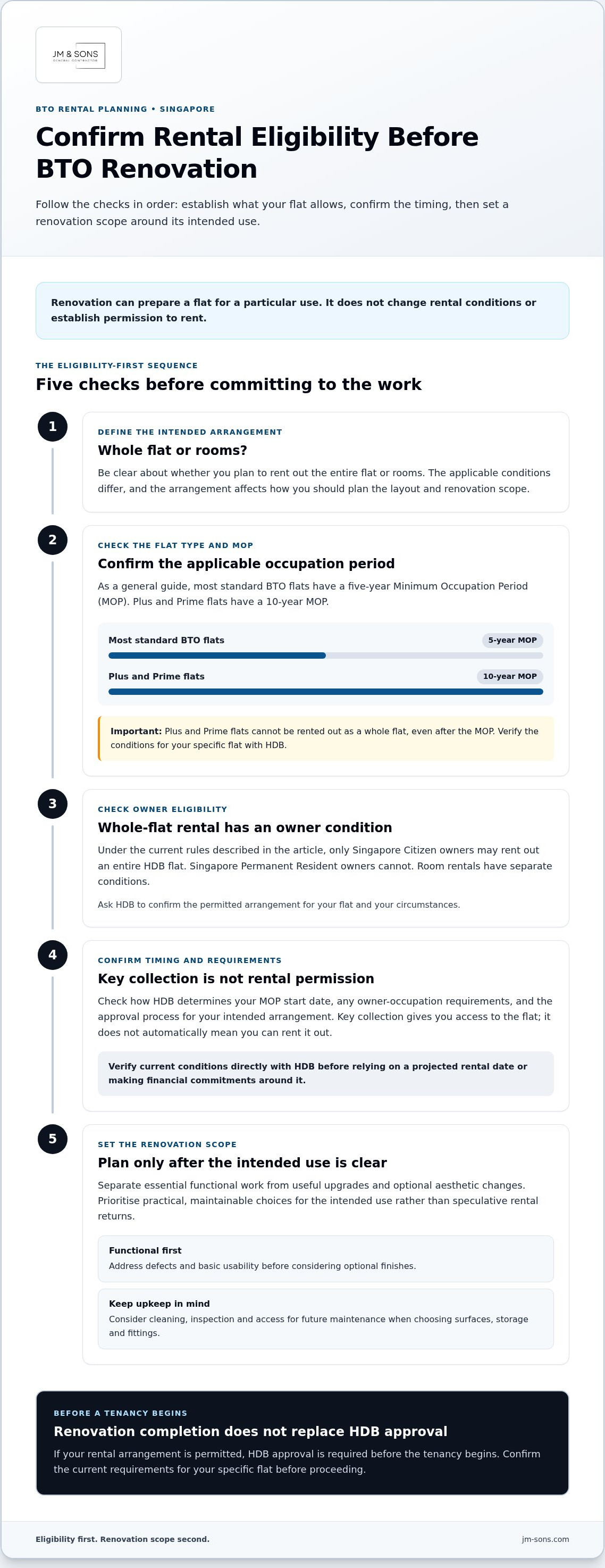
What if the biggest risk in BTO renovation for rental investment is starting work before confirming that you can rent out the flat as planned? Flooring, paint and fittings may be the first things that come to mind, but rental rules can shape the entire project. For most standard BTO flats, owners must meet a five-year Minimum Occupation Period (MOP) before renting out the whole flat. Plus and Prime flats have a 10-year MOP and cannot be rented out as a whole flat. Check the conditions for your specific flat with HDB before committing to renovation.
A practical plan starts with eligibility, not finishes. HDB approval is required before a tenancy begins, and the rules differ depending on whether you intend to rent out the whole flat or rooms. Confirming the relevant conditions early can help you avoid spending on a rental plan that isn’t viable.
This guide explains what to verify, how to prioritise durable, easy-to-maintain finishes, and which renovation decisions and approvals to address before work begins. With the rules and intended tenant needs in view, you can set a sensible scope for preparing your BTO flat.
Table of Contents
BTO Rental Investment: Check Eligibility Before Planning Renovation
A rental investment plan is not the same as permission to rent out a flat. Before budgeting for tenant-ready finishes, establish what the flat’s rules allow and when a rental arrangement could begin. A useful sequence is to confirm the flat and owner’s eligibility, check the current HDB conditions for your intended rental arrangement, and then decide what renovation is justified. The Build-to-Order (BTO) flats scheme provides background, but the conditions attached to your specific flat are what matter for planning.
Check eligibility before investing in rental-led renovation because it determines whether, when and how the flat may be rented. This is especially important if you are considering substantial work based on an expected rental timeline. Renovation can prepare a home for a particular use, but it cannot change the conditions governing that use.
What to verify with HDB before committing to a rental plan
Start by checking the Minimum Occupation Period (MOP) that applies to your flat and how HDB determines its start date. As a general current guide, most standard BTO flats have a five-year MOP, while Plus and Prime flats have a 10-year MOP. Plus and Prime flats cannot be rented out as a whole flat, even after the MOP. Treat these as points to verify, not a substitute for checking the conditions for your own flat.
Owner circumstances matter too. Under current rules, only Singapore Citizen owners may rent out an entire HDB flat; Singapore Permanent Resident owners cannot. Room rentals have separate conditions. Ask HDB to confirm the permitted arrangement for your flat, including any owner-occupation requirements and the applicable approval process. Check the latest requirements directly with HDB before relying on a projected rental date or making financial commitments around it.
How rental eligibility changes the renovation sequence
Keep the stages distinct. Key collection gives you access to the flat; it does not automatically mean you can rent it out. You can begin renovation planning once you understand the flat and its conditions, but occupation requirements and any MOP still apply. If a rental plan is permitted later, HDB approval is required before the tenancy begins. Completing renovation does not establish rental eligibility or replace that approval.
This order helps prevent premature spending. For example, if you expect to rent out the whole flat, first verify that the flat type and owner circumstances allow that arrangement, and when. If only room rental may be possible, the layout and scope may call for a different approach, and you will need to understand the applicable owner-occupation conditions. Avoid designing around assumptions about future tenants before these points are clear.
Once the intended use and timing are better understood, define a renovation scope around practical needs rather than speculative returns. Separate work needed to make the flat functional from optional upgrades, and note decisions that depend on HDB or building-management requirements. This gives you a sounder basis for comparing renovation options without treating an investment goal as permission to rent.
BTO Renovation for Tenants: Prioritise Durable, Practical Choices
Once the intended rental use and timing are clear, plan the flat around everyday living rather than a hoped-for rent premium. Tenants need a home that works: surfaces should be manageable to clean, fittings should be practical to use, and the layout should support ordinary routines. No finish or design choice can guarantee lower upkeep or higher rent. The aim is to balance function, durability and the cost of doing the work.
For BTO renovation for rental investment, separate necessary work from improvements that are useful but optional. Address existing defects and basic functionality first. Then consider changes that make regular use easier, such as improving storage or replacing awkward fittings. Decorative features can wait until the essentials are clear.
Which BTO renovation decisions affect future maintenance
Consider how each surface or fitting will be cleaned, inspected and accessed if it needs attention. A design that makes routine upkeep difficult may create avoidable inconvenience between tenancies. Check that storage can be used without obstructing movement and that fittings can be reached without dismantling surrounding work. These practical questions help shape a maintainable home without assuming any finish will eliminate future maintenance.
How to avoid over-customising a rental flat
Separate personal taste from features that serve a broad range of household needs. A highly specific layout or decorative treatment may not suit every tenant. Settle functional decisions first, then assess aesthetic upgrades against the intended use, scope and budget. A written list of essential, useful and optional items makes choices easier to track and helps keep the project focused.
A simple room-by-room review can reveal where the work matters most:
Entry and circulation: Check that doors, walkways and access to storage remain practical for daily movement.
Kitchen: Consider work surfaces, cabinets and fittings for cleaning, everyday use and access for upkeep.
Bathroom: Review the condition and usability of existing fittings, and identify repairs before considering cosmetic changes.
Bedrooms and living areas: Plan storage and furniture clearances for flexible use, rather than building the layout around one household’s habits.
Keep the scope specific. For each proposed item, record whether it fixes a defect, improves function or is mainly aesthetic. This makes it easier to compare priorities and avoid adding work simply because it is possible. Renovation decisions should also account for relevant HDB requirements and, where applicable, building-management procedures. Verify current requirements before confirming affected work.
JM & SONS carries out BTO and HDB residential renovation, with the scope planned around the flat’s intended use. A floor plan or list of priorities can help focus the discussion on practical work and the flat’s needs. You can discuss a practical renovation scope with the team.
Compare BTO Rental Renovation Scopes Before Spending
There isn’t one renovation scope that suits every BTO flat or rental plan. The right level of work depends on the flat’s condition, intended use and what needs to change to make it functional. A renovation scope is work selected to meet a stated use, not a guarantee of financial return. For BTO renovation for rental investment, compare each option by what it solves, how much disruption it creates and what must be checked before proceeding.
Use this comparison as a starting point, then adjust it to your flat and plans. These are planning categories, not fixed packages.
When a light refresh may fit the rental plan
A targeted refresh may make sense if the existing layout and key fittings suit the intended use, with only specific items needing attention. Don’t assume every BTO flat needs a full renovation. Record what needs repair, what works as it is and what would improve function. This inspection-led approach keeps the scope tied to actual needs rather than a standard list of upgrades.
When functional upgrades or broader works need consideration
Consider a wider scope if the layout, storage, carpentry or condition would make ordinary use difficult. For example, built-in storage may be worth reviewing if existing space does not meet practical needs, but the choice should account for access and flexibility. Changes affecting building elements or services may require approval or technical review. Verify applicable requirements with HDB and relevant building management before work begins.
Before committing, write down the reason for each item and classify it as essential, functional or optional. This makes it easier to scale the project to your plan and compare what each scope involves, without relying on assumptions about rental returns. A clear scope also gives the renovation team a useful basis for discussing the work, coordination and decisions that still need review.
Plan BTO Rental Renovation in Singapore: A Practical Pre-Work Sequence
A clear pre-work process turns a rental plan into a manageable renovation brief. It also gives everyone involved a shared record of the intended work, decisions still pending and the flat’s condition before changes begin. For BTO renovation for rental investment, use a practical sequence: define the intended use, document the flat, agree on the scope, verify applicable procedures, then coordinate the work and handover.
Clarify the intended use. Note whether the plan is for the whole flat or rooms, and who is expected to occupy the home. Keep the renovation brief aligned with the rental arrangement you’ve verified.
Record the flat’s condition. Gather the floor plan, site photos and any applicable renovation or handover checklists. Note existing defects, fittings to retain and areas that need attention.
Set priorities and scope. Separate essential repairs and functional improvements from optional upgrades. Describe each item clearly so the intended work can be discussed and quoted consistently.
Check procedures before work starts. Requirements can vary with the work and the flat. Verify current HDB requirements and relevant building-management procedures, including any approvals or coordination needed.
Coordinate work and handover. Confirm the agreed scope, sequence and communication process, then record completed work and any items that may need future maintenance.
Prepare the brief, flat information and work scope
Make the brief useful to the people planning and carrying out the work. Include the layout, condition notes, photos and intended tenant use. Group items as essential, functional or optional, and flag questions that could affect the scope. A detailed written quotation should make the agreed work clear, while regular communication helps keep decisions and coordination visible.
Be specific about what is to be retained, repaired or changed. For example, identify the room and fitting rather than writing “update bathroom”. If the intended work changes, record the revision and its effect on related items before proceeding. This helps reduce misunderstandings and keeps the scope aligned with the plan.
Coordinate approvals, works and handover
Before work begins, verify current HDB requirements and relevant building procedures for the proposed scope. Don’t assume that a previous project’s process applies to your flat. Once you understand the requirements, sequence related tasks so that work in one area does not create avoidable rework elsewhere. Keep a record of decisions, approvals where applicable and any changes agreed during the project.
At handover, walk through the flat against the agreed scope. Record completed items, note anything outstanding and keep relevant documents and photos together for future reference. A concise handover record can also help you track maintenance without relying on memory.
JM & SONS prepares detailed quotations and communicates the renovation scope clearly for BTO and HDB projects. The team can discuss the proposed work using your project information. To start that discussion, share your floor plan, site photos and renovation checklist.
Prepare Your BTO Flat with JM & SONS’ Renovation Team
Once rental eligibility, timing and intended use are understood, renovation becomes a practical step in preparing the flat. The aim is to agree on work that supports its use, not to promise a particular rental outcome. JM & SONS provides BTO and HDB residential renovation services, with project planning shaped around the flat’s condition and your priorities. Founded in 1990, the company is now managed by the founders’ sons. That family history informs an approach built on clear communication and accountable coordination.
For BTO renovation for rental investment, good project delivery starts with a scope both sides can understand. A detailed quotation should set out the proposed work, while discussion before and during the project helps keep decisions, sequencing and coordination clear.
What clear renovation coordination should cover
A well-defined scope identifies what is included, how work in different areas relates and which decisions need to be settled before site activities begin. JM & SONS has in-house construction capabilities and a 10,000 sq ft local carpentry facility. These capabilities support coordination between construction work and carpentry as part of the project. HDB or building-management requirements still need to be checked for the specific flat and proposed work.
Scope: Keep agreed work and any later changes clearly recorded.
Communication: Make decisions, questions and updates easy to track.
Sequencing: Plan related activities together to help avoid unnecessary disruption or rework.
This structure gives the project a clear reference point. It also makes it easier to distinguish a necessary change from an optional addition and understand how a decision may affect other work.
Share the information that helps shape a renovation discussion
A useful first discussion can begin with the flat’s floor plan, current site photos and a list of intended works. Include notes on the areas you hope to retain, repair or improve, along with the intended use of the flat. These details help focus the conversation on priorities, sequencing and a project-specific scope instead of assumptions about what every rental flat needs.
JM & SONS approaches residential renovation as practical preparation for the flat’s intended use. A discussion can help clarify how the proposed work fits together and what information is needed for a detailed quotation. It does not determine rental eligibility or replace checks with HDB and relevant building management.
If you’re ready to discuss the renovation scope, send JM & SONS your floor plan, site photos or renovation checklist on WhatsApp. A clear starting brief helps keep the conversation focused and makes it easier to assess the work before committing to unnecessary changes.
Make Your Next Renovation Decision with Confidence
Before confirming any work, turn your priorities into a brief you can review. Note what the flat needs, what can remain as it is and which choices are still open. This gives you a practical basis for deciding whether each proposed item belongs in the project. A considered BTO renovation for rental investment should serve the flat’s intended use without relying on assumptions about future rental performance.
JM & SONS is a family-owned contractor providing renovation for BTO and HDB flats. For a project-specific discussion, share the details you have and use the conversation to clarify priorities and the work involved. There’s no need to settle every finish before the scope is understood.
Start a WhatsApp conversation about your BTO renovation and share a floor plan, site photos or renovation checklist. A clear first step can help you move forward with a plan grounded in your flat and intended use.
Frequently Asked Questions
Can I rent out a BTO flat immediately after collecting the keys?
No. Key collection alone doesn’t make a flat available for immediate rental. Before arranging a tenancy, check the flat’s rental eligibility and the applicable HDB process. If rental is permitted, HDB approval must be obtained before the tenancy begins. Also account for the minimum rental period of six months when considering when a tenancy could start and what arrangement may suit your plans.
Can I rent out a room in my BTO flat instead of the whole flat?
Room rental may be possible, subject to the conditions that apply to your flat and ownership situation. It is a separate arrangement from renting out the whole flat, so don’t assume permission for one automatically covers the other. Check HDB’s current room-rental conditions, including who may occupy the flat and the minimum tenancy period, before advertising or agreeing to a room rental.
Does renovating a BTO flat change its Minimum Occupation Period?
No. Renovation doesn’t change the MOP. Treat renovation dates and occupation-period records as separate matters, and keep documents relating to the flat’s purchase and completion together. If you’re planning around a future rental date, use the applicable HDB conditions rather than the date renovation finishes. This avoids mistaking a project milestone for a change in the flat’s eligibility.
Can renovation work start before I have confirmed my rental eligibility?
You can discuss or plan renovation before a rental plan is viable, but keep the scope suitable for the flat’s present use as well. HDB requires owners to engage contractors listed in its Directory of Renovation Contractors for renovation works, including work that doesn’t need a permit. Proposed hacking or demolition of walls requires HDB’s prior written approval. Confirm applicable requirements before starting affected work.
Do BTO renovation works require approval from HDB or building management?
Some works require prior approval, while others may still need to follow HDB or building-management procedures. For instance, HDB requires prior written approval for wall hacking or demolition. Check the requirements for each proposed item before confirming the work sequence, and keep relevant approvals or correspondence with your project records. This helps avoid assumptions about what a particular type of work involves.
Should I renovate a BTO flat before finding tenants?
Not necessarily. First decide what work is needed for the flat to function well, then consider whether it makes sense to complete that work before marketing it. If you wait until a tenant is identified, their intended use may clarify which practical improvements matter, but coordinating works later can affect your schedule. Avoid making costly choices based only on an assumed tenant preference or rental premium.
What information should I prepare before discussing a BTO renovation project?
Along with a floor plan and site photos, note the flat type, the areas you want to retain or change, and any defects observed during inspection. Bring relevant HDB correspondence or renovation documents if they affect the proposed work. A short list separating essential work from optional upgrades helps make the discussion more focused. For BTO renovation for rental investment, include the intended rental arrangement as context, not as proof of eligibility.


Comments