
Office Partition Hacking in Singapore: The 2026 Professional Guide

Hacking an office partition is rarely just about demolition; it's a precision exercise in coordination that can determine whether you get your security deposit back. In Singapore, what looks like a simple drywall removal often involves navigating a maze of hidden electrical conduits and sensitive fire protection systems. We've seen many tenants approach office partition hacking Singapore projects as a minor task, only to face heavy fines or delays because they overlooked MCST noise protocols or BCA requirements.
It's stressful to manage a move while worrying about potential structural damage or unexpected reinstatement costs. We believe in a straightforward approach that prioritizes transparency and safety over speed. This 2026 guide is designed to give you peace of mind by outlining the essential steps for a compliant removal. You'll learn about current market rates, the necessary permits for commercial spaces, and how to coordinate with building management to ensure your site is cleared without a hitch.
Table of Contents
What is Office Partition Hacking and Why is it Necessary?
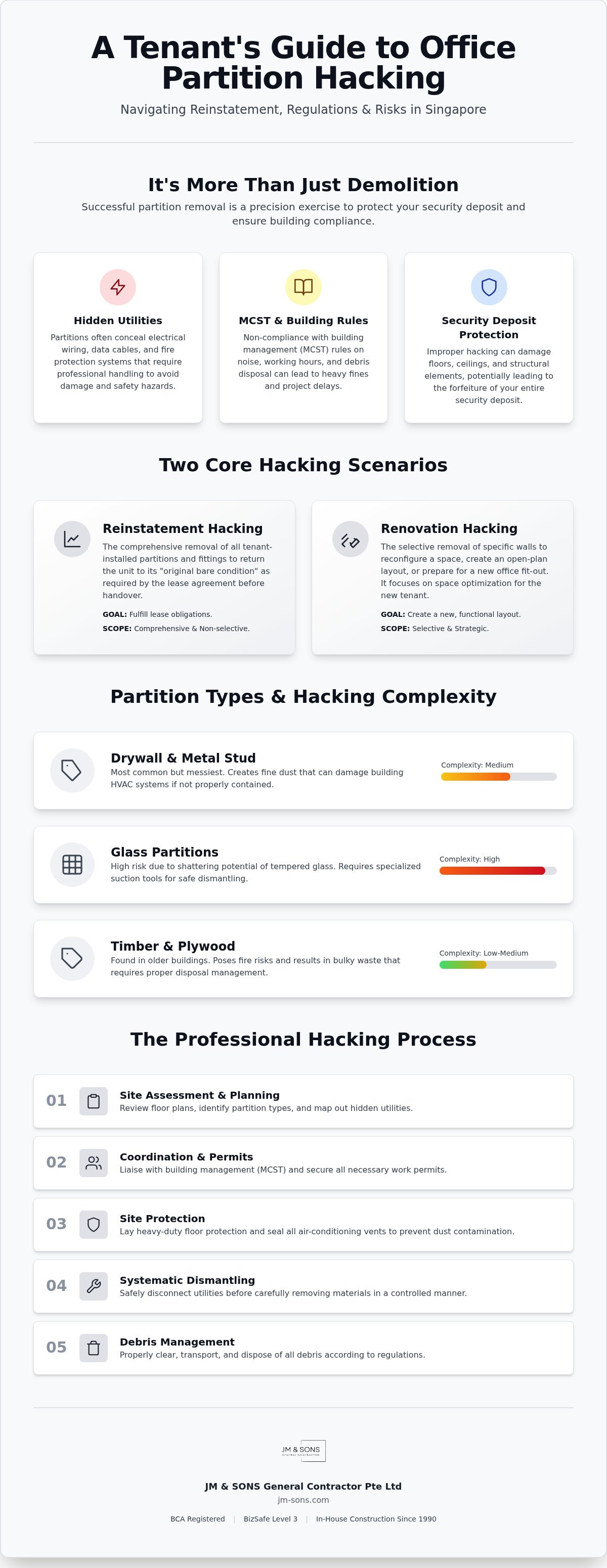
In the context of Singapore's commercial real estate, "hacking" refers to the systematic and controlled removal of non-structural interior walls. While the term sounds aggressive, professional office partition hacking Singapore requires a high level of technical precision rather than brute force. Understanding What is a partition wall? is the first step in recognizing that these dividers are often integrated with the building's core infrastructure. They contain electrical wiring, data cables, and fire protection systems that must be handled with care.
Most businesses encounter the need for hacking during two critical phases: when they're taking over a new space that requires a custom layout, or when they're vacating a unit. In Singapore, commercial leases almost always include a "Reinstatement Clause." This legal obligation requires the tenant to restore the premises to its original bare condition before handing the keys back to the landlord. Failing to execute this properly can lead to the forfeiture of security deposits or costly disputes. Professional hacking ensures that partitions are dismantled without compromising the building's safety protocols or structural integrity.
Reinstatement vs. Renovation Hacking
Renovation hacking is usually selective. It focuses on space optimization, where we remove specific walls to create an open-plan environment or to facilitate an expansion. Reinstatement hacking is more comprehensive. It aims to return the office to the "original bare condition" specified by the landlord. We help clients identify which walls were tenant-installed and which are building-original by reviewing old floor plans. This distinction is vital. Hacking a building-original wall could result in structural damage or a serious breach of your tenancy agreement.
The Importance of Precision in Commercial Spaces
Precision is what separates a certified contractor from a general laborer. In a commercial building, your office is connected to shared services like fire sprinklers, air conditioning ducts, and centralized electrical risers. A "smash-and-grab" demolition approach risks triggering fire alarms or damaging hidden wiring that serves other tenants. We use a systematic dismantling approach to protect common property. This includes laying heavy-duty floor protection to safeguard expensive raised flooring or carpets during the removal process. It's about leaving the site clean, safe, and ready for the next phase, whether that's a new fit-out or a final handover.
Types of Office Partitions and Hacking Complexity
Not all walls are built the same, and their removal requires different levels of technical care. The complexity of office partition hacking Singapore depends largely on the materials used and how they were integrated into the building's structure. While most partitions are non-structural, they still must comply with safety standards outlined in Singapore's Building Control Regulations. Before we start, we always determine if a partition is full-height, meaning it extends past the false ceiling to the concrete slab, or if it simply stops at the ceiling grid. Full-height walls are more complex to remove because they often interfere with shared building services like air-con ducting and fire sprinklers.
In older commercial buildings across areas like Tanjong Pagar or Jalan Besar, we often encounter timber and plywood partitions. These require careful dismantling to manage fire risks and bulky waste. Modern offices, however, lean toward drywall or glass. Each material presents unique challenges for a contractor, from dust management to the physical weight of the components. If you aren't sure what your walls are made of, you can send us a few site photos for a preliminary assessment.
Drywall and Metal Stud Removal
Drywall is the most common partition type due to its cost-efficiency. However, it's also the messiest to remove. The process involves stripping gypsum boards to expose the galvanized steel studs. This creates significant fine dust that can easily clog a building's central air-con system if not properly managed. We prioritize sealing all return air vents and using heavy-duty floor protection before the first board is touched. We also coordinate closely with electrical teams to ensure all internal wiring is safely disconnected and terminated before the metal frames are dismantled.
Glass Partition Dismantling
Glass partitions provide a modern, open feel, but they carry the highest risk during the hacking process. Most office glass is tempered, which means it can shatter into thousands of small pieces if handled incorrectly or struck at a weak point. Our team uses specialized suction tools and a methodical sequence to manage the weight of these heavy panels. Logistics are often a challenge in CBD buildings where service lifts have strict size limits. We plan the dismantling process to ensure large glazing units are moved safely through tight corridors without damaging common property or causing injury.
The Professional Hacking Process: More Than Demolition
Professional office partition hacking Singapore isn't just about breaking things down. It's a controlled reversal of the fit-out process that requires a methodical approach. We begin every project by establishing a safe perimeter. This involves laying down heavy-duty floor protection to prevent scratches on tiles or damage to raised floor systems. We also seal air-conditioning vents with plastic sheets. If dust enters the building's central HVAC system, it can trigger maintenance alarms or lead to complaints from neighboring units. This preparation phase is what ensures the office remains functional and the building management stays satisfied.
The actual removal follows a strict top-to-bottom sequence. We start by removing the ceiling tracks and cornices, then dismantle the panels, and finally pull up the floor tracks. This systematic approach prevents the structure from becoming unstable during the work. Once the materials are down, we sort them for disposal. Managing debris in a high-rise office requires careful planning. We ensure the space is left "broom-clean" for the final inspection, which is a standard requirement for most commercial handovers in Singapore.
Electrical and Fire Safety Coordination
Before the first hammer swings, we locate all hidden utilities. Fire protection systems are the most sensitive components. If a partition is full-height, fire sprinkler pipes often run through or directly above the wall. Accidentally striking a live pipe can cause immediate flooding across multiple floors. We also ensure that all power points and data sockets within the walls are safely terminated. Our team caps live wires at the source or junction box to prevent short circuits. This ensures the site remains in full compliance with SCDF safety standards throughout the project.
Logistics and Debris Disposal in Singapore
Operating in the CBD or industrial hubs like Jurong requires strict adherence to building management rules. Most MCSTs only allow hacking works after 6 PM on weekdays or during weekends to avoid noise disruptions to other tenants. We coordinate the use of cargo lifts and loading bays well in advance to ensure a smooth flow of materials out of the building. All construction waste is transported to NEA-approved disposal sites. We prioritize responsible disposal methods, separating metal studs from gypsum boards to minimize environmental impact and comply with local waste management regulations.
Singapore Regulations: Permits, MCST, and Compliance
Compliance in Singapore's commercial landscape is about more than just avoiding fines; it's about respecting the shared environment of a professional business hub. Even though partition walls are non-structural, removing them involves strict protocols set by both the Building and Construction Authority (BCA) and individual building management. When planning office partition hacking Singapore, your first point of contact is always the Management Corporation Strata Title (MCST). They oversee the building's integrity and ensure that your works don't disrupt the daily operations of neighboring businesses.
Noise management is a critical factor in these regulations. Most commercial buildings strictly prohibit hacking during standard office hours. You'll typically find that heavy work is only permitted after 6 PM on weekdays or during the day on weekends. Beyond timing, insurance is a mandatory requirement. We maintain comprehensive Public Liability Insurance and Work Injury Compensation (WICA) coverage for every site. This protects you from financial liability should any accidents occur during the dismantling process, providing the peace of mind that a professional service should deliver.
Navigating Building Management Requirements
Building managers require transparency before they grant a permit to work. This process usually involves submitting detailed floor plans that highlight the specific walls to be removed and a comprehensive hacking schedule. You'll also need to account for renovation deposits. These are refundable sums held by the MCST to ensure common areas, like lift lobbies and corridors, are returned in their original state. We assist our clients by coordinating cargo lift bookings and securing the necessary permits for debris disposal, ensuring that the logistics don't become a bottleneck for your move.
Safety Certifications for Contractors
Landlords today are increasingly cautious about who enters their premises. A BizSafe Level 3 certification is often the minimum requirement for contractors to step foot in Grade A office buildings. This certification proves that the contractor has a robust risk management system in place. As a BCA-registered contractor, we bring a level of accountability that unregistered teams simply cannot match. We understand the boundaries between tenant-added partitions and the building's structural elements. Learn about JM & SONS’ safety credentials to see how we prioritize site safety and technical compliance on every project.
If you're feeling overwhelmed by the paperwork required by your building management, we can help simplify the process. Contact us via WhatsApp to discuss your building's specific requirements and get a compliant hacking plan started.
Choosing the Right Hacking Contractor in Singapore
Selecting a contractor for office partition hacking Singapore is a decision that directly impacts your final handover success and your budget. While a low-cost quote might look attractive on paper, "cheap" hacking often leads to expensive complications. We've encountered many tenants who hired unlicensed teams only to face massive repair bills for damaged raised flooring or accidentally triggered fire sprinklers. These mistakes don't just cost money; they can delay your move and lead to legal disputes with your landlord.
A reliable contractor should demonstrate deep experience with commercial buildings similar to yours. Every building in the CBD or industrial zones has unique quirks, from specific service lift dimensions to strict MCST debris management rules. When you evaluate a quote, look for a detailed breakdown rather than a lump sum figure. A transparent quotation should clearly state the costs for site protection, utility termination, and NEA-approved disposal fees. If these aren't listed, you'll likely face "hidden extras" once the work begins.
Accountability and Direct Carpentry Support
JM & SONS has operated as a trusted partner for Singapore businesses since 1990. As a second-generation family contractor, we prioritize personal accountability over aggressive expansion. Our in-house construction capabilities ensure that the hacking process is handled by our own trained team, leading to a much cleaner and safer site. Because we maintain a 10,000 sq ft local carpentry facility, we can also provide immediate support for any site restoration or custom joinery required during the reinstatement. We take a "straight-shooter" approach to every site survey, providing honest advice on what's required to meet your landlord's standards.
Ready to Restore Your Office Space?
Preparing for a hacking project is easier when you have the right information on hand. When you're ready for a site survey, try to have your original floor plans and any specific reinstatement checklists provided by your landlord or building manager. This allows us to assess the walls accurately and provide a comprehensive quote that covers both the dismantling and the proper disposal of materials. We focus on providing a stress-free experience, ensuring that your office is cleared and ready for inspection without the worry of non-compliance or hidden costs.
If you need a reliable team to handle your office removal, we're ready to help. WhatsApp JM & SONS for a professional hacking assessment and let our experienced team manage the complexities of your reinstatement.
Secure a Seamless Office Handover
Navigating the final stages of a tenancy requires a clear plan and a reliable partner. Successful office partition hacking Singapore depends on strict adherence to MCST noise schedules and a deep respect for the building's fire safety infrastructure. By prioritizing systematic dismantling over aggressive demolition, you protect your security deposit and ensure the space is returned in the condition your landlord expects.
JM & SONS General Contractor Pte Ltd has supported Singapore businesses since 1990 as a second-generation family firm. We specialize in complex after-hours reinstatement works, bringing the accountability of a BCA-registered and BizSafe Level 3 certified team to every site. We believe in providing transparent, detailed quotations so you can manage your relocation budget with total certainty. If you have your floor plans ready, we can provide a professional assessment to get your project moving forward without the stress of non-compliance.
WhatsApp us your floor plan for a hacking quote today and let our experts handle your office removal with care.
Frequently Asked Questions
How much does office partition hacking cost in Singapore?
The cost of office partition hacking Singapore is determined by the material type, total surface area, and site accessibility. Drywall removal is often labor-intensive due to the need for dust containment, while glass partitions require specialized suction tools and careful handling. We suggest a site survey to provide a transparent, detailed quotation that covers site protection and disposal. This approach ensures there are no hidden fees or unexpected costs once the project begins.
Do I need a permit to remove a non-structural partition wall?
While you generally don't need a formal BCA permit for non-structural interior walls, you must obtain written approval from your building's Management Corporation Strata Title (MCST). They review your layout plans to ensure the removal doesn't compromise shared building services like fire protection or centralized air-con. If the wall is load-bearing or touches a structural element, a Professional Engineer (PE) must endorse the plans before work can start.
Can partition hacking be done during office hours in Singapore?
Hacking is almost never allowed during standard office hours due to the significant noise and vibration it creates. Most commercial building managements strictly limit noise-heavy works to after 6 PM on weekdays or during the daytime on weekends. This prevents disruption to other tenants in the building. We coordinate directly with your building manager to book the necessary time slots and cargo lifts to ensure the work is compliant.
What happens to the electrical wiring inside the partitions being hacked?
All electrical and data cables inside the walls must be safely terminated and capped at their source or junction box before hacking starts. This prevents short circuits and fire hazards while protecting the building's main electrical risers. Ensuring these wires are professionally handled is a critical part of the process. It keeps the site safe for our team and ensures the unit is ready for the next phase of renovation.
Does the contractor handle the disposal of the hacked debris?
A professional contractor includes debris management and disposal at NEA-approved sites as a standard part of their service. We dismantle the partitions and clear the site, leaving the office broom-clean for your final inspection. Proper disposal is necessary to comply with Singapore's environmental regulations. It also avoids the risk of fines associated with illegal dumping or improper waste management in commercial and industrial zones.
How long does it take to remove partitions in a standard 2,000 sq ft office?
Removing partitions in a standard 2,000 sq ft office usually takes between 2 to 4 working days. This timeframe includes the initial setup of floor and vent protection, the systematic dismantling of the walls, and the logistical task of moving debris through shared cargo lifts. If the space contains full-height glass or complex timber partitions, the process might take a little longer to ensure everything is removed safely and cleanly.
Will hacking partitions affect the building’s fire safety certification?
Removing partitions can impact fire safety if the new open layout changes the effectiveness of sprinkler coverage or smoke detectors. In Singapore, all layout modifications must stay within SCDF fire safety guidelines. We coordinate with fire safety specialists to ensure that your removal project doesn't leave any gaps in protection. This keeps the premises safe and ensures that the building’s fire safety certification remains valid after the works are completed.
Can glass partitions be reused or sold after being hacked?
Reusing glass partitions is difficult because tempered glass is manufactured to specific dimensions and cannot be recut to fit a new space. There is also a high risk of the glass shattering during the dismantling and transport process. Most businesses find that the labor and storage costs for careful removal outweigh the value of the materials. As a result, glass is typically sent for recycling at specialized facilities rather than being reused.


Comments